The Plateau & Injury Connection: How Understanding Physical Fatigue Thresholds Keeps Climbers Stronger and Boosts Member Retention
How Understanding Physical Fatigue Thresholds Keeps Climbers Stronger and Boosts Member Retention
The Hidden Threat to Climber Progression and Gym Retention
Indoor rock climbing has experienced a transition from a niche training methodology for alpine pursuits into a mainstream physical fitness and recreational discipline [1]. Today, adult climbers aged 25 to 65 seek out indoor walls not just for occasional recreation, but as a primary venue for athletic development and health. However, as climbers transition from the initial exploration phase into intermediate training zones, they frequently encounter an obstacle: the skill plateau.
Industry survey data indicate that training culture among indoor climbers has expanded, with over 60% of surveyed climbers reporting that they train specifically for climbing [2]. Furthermore, observational research among outdoor climbing cohorts demonstrates participation in formal instruction, with 62% of surveyed participants in a specific study sample reporting prior completion of structured climbing training courses [3].
A lack of systematic guidance during stall points often leads to a cycle of frustration, physical overexertion, and eventual dropout. In the commercial gym environment, member retention is closely linked to the participant's sense of continuous, safe progression. When a climber’s progress stalls, increasing training volume and intensity without structural planning places them at risk of sustaining overuse injuries [4].
In indoor climbing, gym staff and structured coaching represent a key structural support against the "plateau-injury loop."
To keep climbers engaged, healthy, and consistently subscribing, facilities can move away from the unstructured approach of increasing volume to progress. Instead, gyms can adopt an evidence-based curriculum that emphasizes movement mastery, load management, and the biological realities of physical fatigue thresholds.
At ClimbWell, our motto guides this transition: "The climbing gym was built for outdoor. ClimbWell was built for indoor." By teaching climbers to climb efficiently, climb together, and climb well, facilities can build an ecosystem that supports long-term member retention.
Physical Fatigue Thresholds and Overuse Biomechanics
To design physical training programs for adults, coaches and instructors must understand the physiological markers of fatigue and the mechanical strains experienced during indoor climbing.
Physiological Markers of Fatigue and Forearm Occlusion
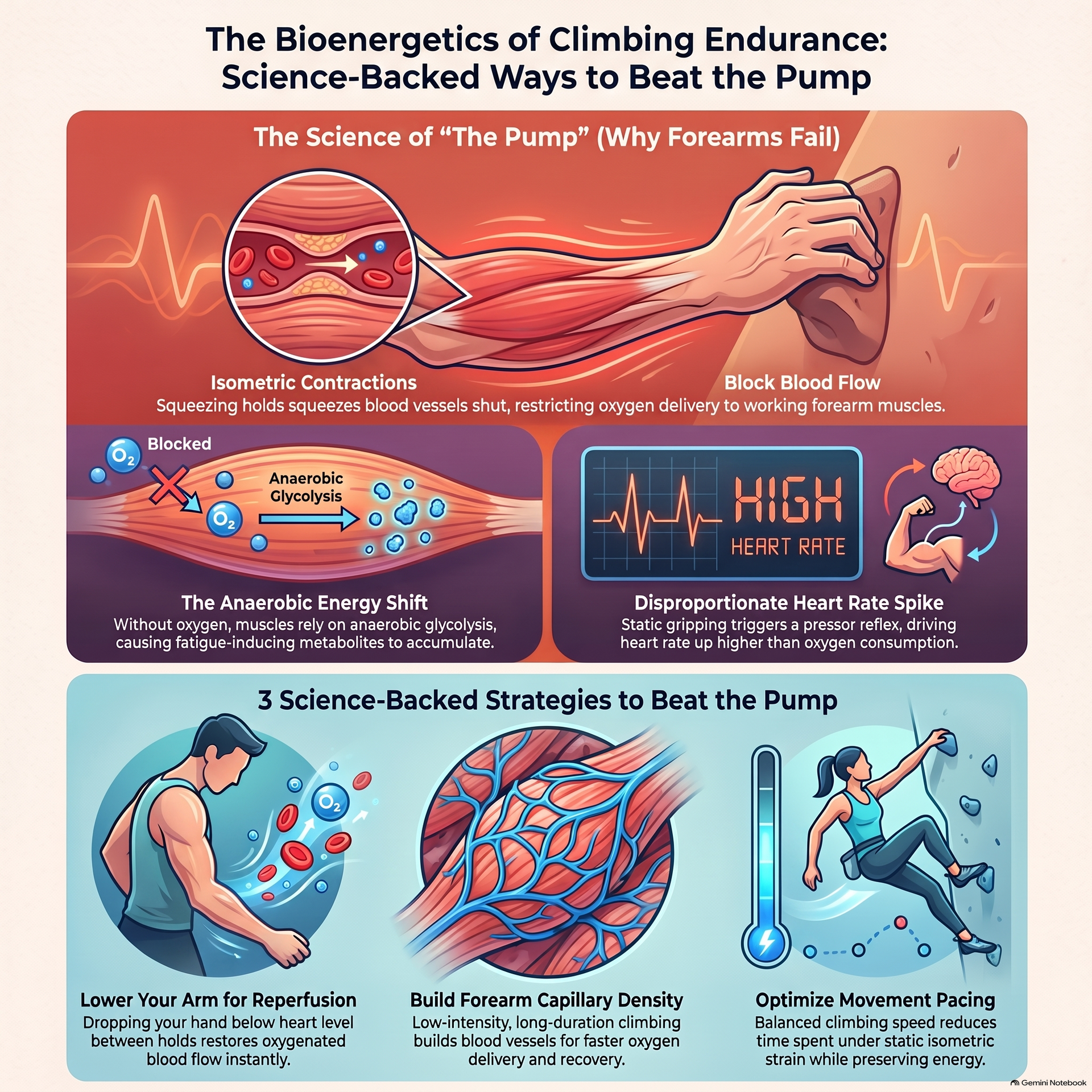
During high-intensity climbing bouts, the capacity of the hand and finger flexor musculature to sustain work serves as a primary performance-limiting factor [5]. Laboratory research demonstrates that climbing is characterized by intermittent isometric contractions performed frequently above the level of the heart [6]. As contraction forces increase, intramuscular pressure rises above local arterial pressure, causing transient vascular occlusion that restricts local oxygen delivery and impairs metabolic byproduct clearance until contraction ceases [6].
Following high-intensity climbing, blood lactate levels accumulate, with post-bout concentrations typically measured between 6 and 10 mmol/L at or near voluntary exhaustion [7]. Laboratory testing shows that this metabolic accumulation correlates with a decrease in handgrip endurance (holding time at a target percentage of maximal voluntary contraction), whereas absolute maximal handgrip strength recovers at a faster rate [8]. From a movement mechanics perspective:
As a climber's forearms get tired, their grip becomes sloppy. To make up for it, they start scrambling and moving awkwardly, which puts a lot of extra (and unnecessary) strain on their joints and on their muscles.
The "Climber's Finger" Epidemic: Pulley Biomechanics
The most common upper-extremity overuse injuries sustained while climbing occur in the fingers, with finger pulley ruptures highlighted as a primary injury type. [9]. The A2 and A4 pulleys serve structurally to prevent the flexor digitorum profundus (FDP) and superficialis (FDS) tendons from bowstringing away from the bone during finger flexion [10].
This pathology is heavily associated with the repetitive use of the crimp grip, a hand position where the proximal interphalangeal (PIP) joint is flexed to 90 degrees or more and the distal interphalangeal (DIP) joint is hyperextended [11]. In a crimp grip, biomechanical modeling indicates that forces acting on the A2 pulley reach 2.7 to 3 times (and up to 3.5 to 4 times under peak isometric loading) the force applied at the fingertip [11]. Furthermore, during a standard crimp grip, the A2 pulley must sustain 40% more tension than the flexor tendon itself [12].
In a 2023 study of adult indoor gym climbers in New York City, finger injuries were the most common acute injury location (39%), yet only 26% of those with finger injuries sought care from a medical practitioner [13].
Statistical Predictors of Prolonged Injury
When injury occurs, the recovery timeline can be extended. In a retrospective study of gym-based indoor climbers, 32% of all reported injuries were classified as "prolonged," resulting in pain or functional limitations lasting 12 weeks or longer [14].
While this study establishes that older, more experienced, and higher-volume climbers experience higher odds of long-lasting injuries, these findings point to the potential value of structured load management and professional instruction over unguided training.
Finger Strength vs. Endurance Variance
A common assumption among intermediate climbers is that increasing absolute finger strength is the sole requirement to break through performance plateaus [15].
Sports science indicates, however, a more complex relationship. While maximal finger flexor strength correlates with climbing performance [16], International Rock Climbing Research Association (IRCRA) battery testing demonstrates that continuous finger hang tests and upper-body power tests (such as the powerslap) account for between 15% and 51% (with continuous finger hangs explaining 39.4%) of the variance in climbing ability [17].
Furthermore, research on intermittent fingerboard hangs reveals that the capacity of forearm muscles to re-oxygenate during brief rest intervals strongly predicts lead climbing performance [18]. This means that to improve climbing and recover faster, climbers shouldn't just focus on raw strength. Building up their endurance, boosting blood flow to their muscles, and practicing active recovery will also make a huge difference.
Why Skill Plateaus Lead to Over-Training and Injury
To understand the connection between skill plateaus and orthopedic trauma, coaches and instructors must observe the behavioral patterns of unguided climbers.
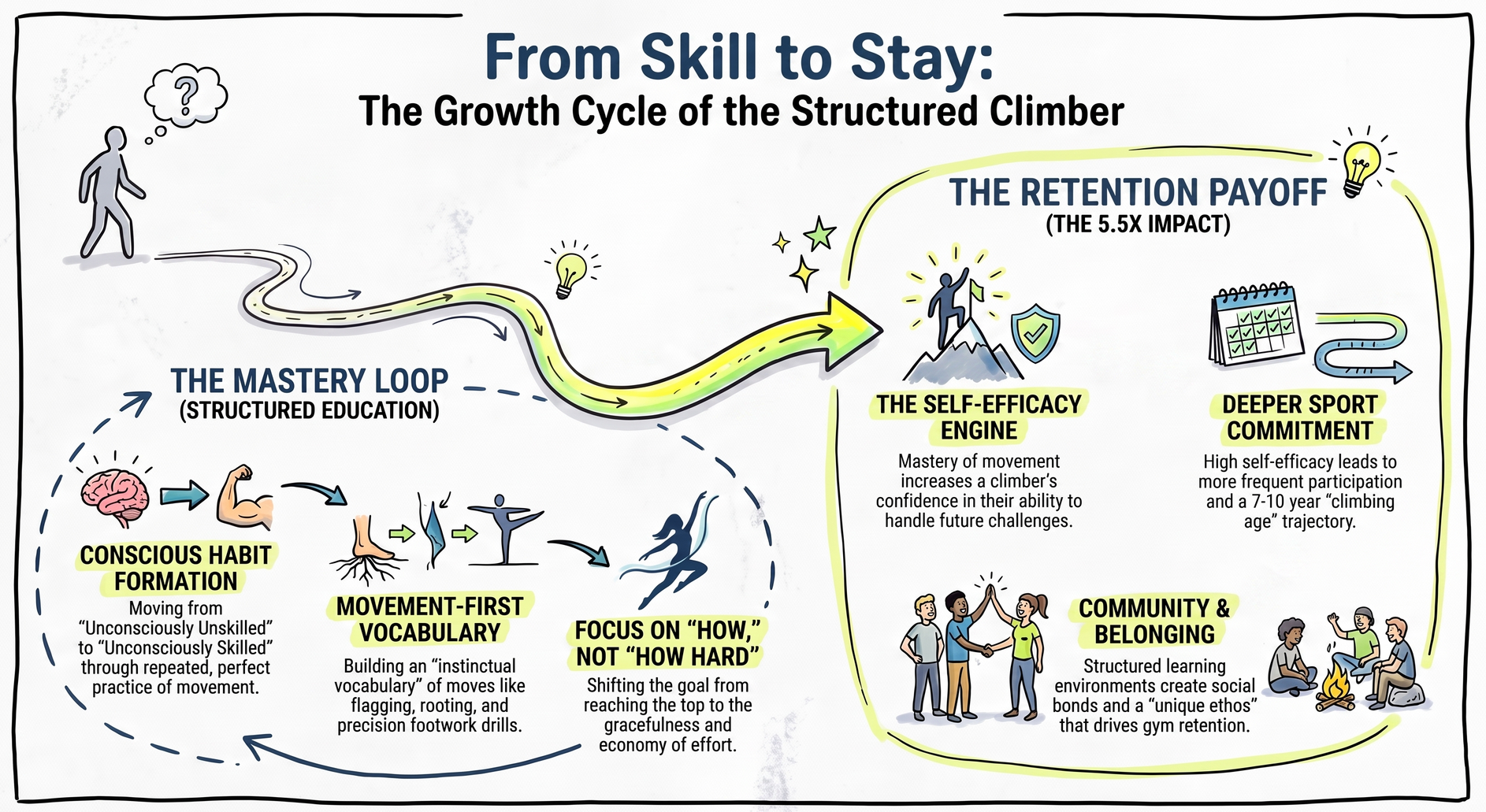
When a recreational climber reaches an intermediate plateau—often stalling at moderate grades—they may lack the movement repertoire needed to execute complex routes efficiently [19].
To compensate, climbers frequently attempt high-difficulty routes at their redpoint limit repeatedly. From a coaching perspective, this repetitive loading on similar hold types accelerates localized fatigue; as forearm exhaustion sets in, movement fluency decays, leading to increased fall frequency, uncontrolled landings, and dynamic loading on the upper extremities.
Epidemiological data shows that a substantial proportion of climbing injuries stem from chronic overuse rather than acute falls:
- Across cross-sectional surveys of indoor rock climbers, 20% to 44% of participants reported chronic overuse injuries arising from repetitive musculoskeletal strain [21].
- A 4-year prospective clinic case series of 911 injuries found that overstrain/overuse accounted for 58.3% (n = 531) of presenting pathologies, compared to 41.7% (n = 380) acute injuries [22].
Despite the prevalence of these injuries, many climbers do not seek professional healthcare. Studies reveal that 38% of injured gym climbers sought care from a medical practitioner [13], while a prospective survey of recreational climbers found that 44.9% reported persistent chronic pain or functional limitations upon returning to climbing [23, see also].
In qualitative interview data from gym climbers, reasons cited for self-managing injuries included:
- minimal pain or interference (54%);
- reassurance from self-research, online climbing forums, or peer advice (46%);
- prior personal experience (38%), and;
- a belief that medical practitioners could not offer specific intervention (36%) [14].
A 2026 survey of 745 recreational climbers found that 25.2% used websites/blogs and 18.7% used YouTube for treatment information (totaling 43.9% using online sources), compared to 16.2% consulting healthcare professionals [23].
In the same 2026 study, a survey of 85 hand care providers revealed that while 78.8% incorporated climbing-specific knowledge into patient care, only 38.8% rated their sport-specific understanding of climbing injuries as comprehensive (44.7% rated it somewhat adequate and 15.3% not adequate), and 62.4% reported treating 1 to 5 climbers annually [23].
This educational gap presents an opportunity for climbing gyms. By providing structured, scientifically grounded coaching, gyms can step into this information space, helping reduce liklihood of injury and guiding members toward more sustainable training practices.
Operational Blueprint: Gym Strategies for Fatigue & Plateau Management
To operationalize these scientific findings, climbing facilities can implement a multi-layered curriculum and route-setting strategy designed around ClimbWell.
Structured Coaching Programs and Andragogy
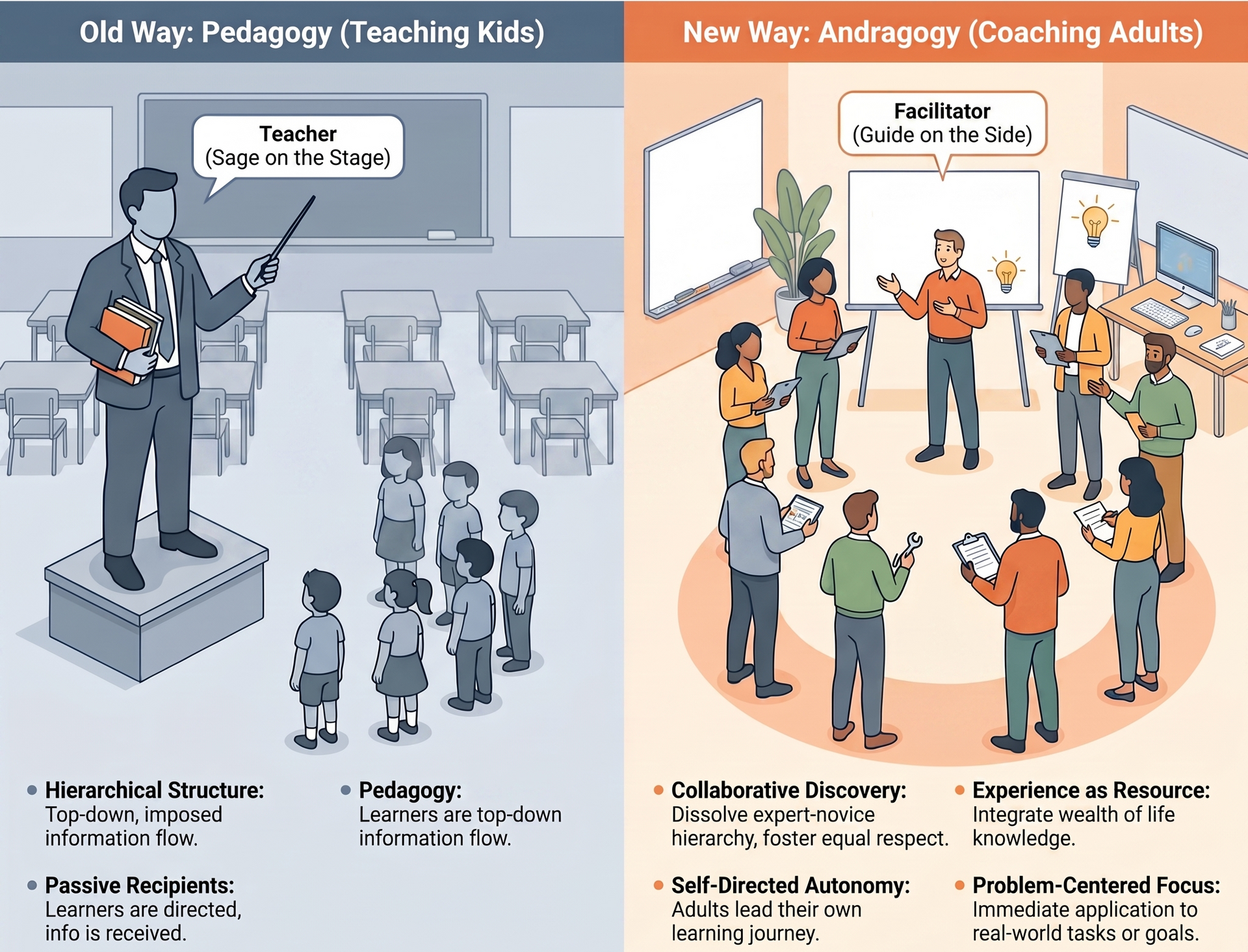
Adult education (andragogy) relies on collaborative, problem-based learning where participants have autonomy and understand the rationale behind their training [24]. Gyms should consider transitioning part of their real estate from unstructured climbing sessions to formal adult academies utilizing the ClimbWell program.
Balanced and Biomechanically Mindful Routesetting
Routesetting shapes how a climber navigates risk—intentional design keeps fall zones predictable and joint loading manageable, while poor hold choices, aggressive orientations, or awkward body positions can transform challenging movement into catastrophic failure.
Head routesetters can design routes that allow for a smooth progression pathway, avoiding abrupt grade jumps that force intermediate climbers into injurious movement patterns.
- Hold Selection: Route designs can limit mandatory closed crimping on steep walls. Instead, sets can utilize larger holds (such as slopers or pinches) that distribute forces across a larger surface area and promote open-hand grip techniques [11].
- Body Position Options: Setters can design movement sequences that offer multiple technical solutions, allowing shorter or older climbers to use body tension, hip rotation, and precise footwork (such as flagging and edging) rather than relying solely on raw pulling power.
- Hold Orientation: Setters can avoid placing shallow, one-finger or two-finger pocket holds in intermediate sets. These holds can force isolated tendon loading and lumbrical strain, which can be riskier for recreational adult populations [27].
Active Recovery Zones
To mitigate forearm fatigue and accelerate lactate clearance, gyms can also establish dedicated Active Recovery Zones.
- The Science of Active Recovery: Physiological research shows that performing very low-intensity active recovery (such as easy climbing or light recumbent cycling at 25 Watts) shortens the time required to clear accumulated blood lactate and return to baseline levels compared to passive, seated rest [5].
- Implementation: Design designated "active recovery" circuits on vertical or slightly slabby walls. These routes should feature large, positive jugs and secure foot holds. Climbers can be educated to use these zones for cool-downs or active rest intervals between intense attempts, allowing forearm muscles to reperfuse and flush metabolic byproducts efficiently [5].
Conclusion
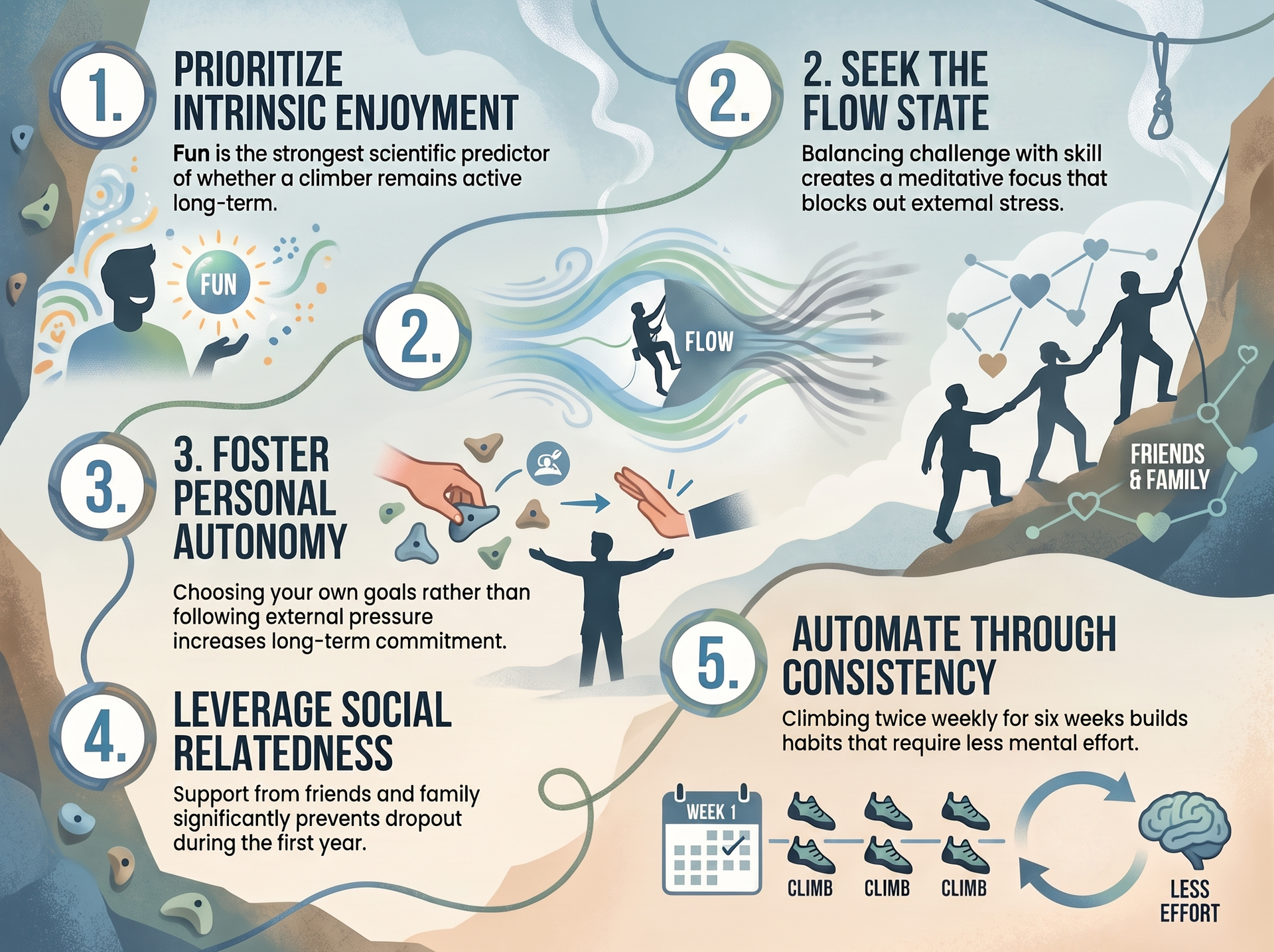
In commercial indoor climbing, operational sustainability and membership retention are closely tied to the health, safety, and continuous progression of the member community.
When intermediate climbers encounter skill plateaus, unmanaged increases in training volume and repetitive crimping they increase the risk of overuse injuries such as flexor tendon pulley ruptures.
Epidemiological data indicates that 32% of indoor climbing injuries result in prolonged impairment (≥12 weeks), with older age, weekly volume, grade difficulty, and experience serving as significant predictors. Furthermore, many climbers rely on online resources for injury guidance and fewer than 40% seek professional medical evaluation. Therefore, structured gym instruction provides an essential service.
By implementing ClimbWell—organizing routes and training around the
ClimbWell Challenge Scale, utilizing a
Four-Part Program Demand Profile, enforcing protocols like the
100-Move-Minimum-Warm-Up (or the
RAMP Protocol), and establishing dedicated
Active Recovery Zones—facilities can begin to introduce additional protective factors to support their members' physical longevity.
References
- Kurten K. Who Are Climbing Walls: Exploration of the Social World of Indoor Rock Climbing. Master's Thesis, University of Northern Colorado; 2013.
- Climbing Wall Association. What Seven Years of Climber Data Tell Us About Where Indoor Climbing Is Headed. CWA Industry Report; 2026.
- De Salvo P, et al. Do risk perception and safety of sites influence rock climbing destination choices? Tourism Geographies. 2022;24(4):612-631.
- Quarmby A, et al. Risk factors and injury prevention strategies for overuse injuries in adult climbers: a systematic review. Front Sports Act Living. 2023;5:1269870.
- Giles LV, Rhodes EC, Taunton JE. The physiology of rock climbing. Sports Med. 2006;36(6):529-545.
- McKellar B. The Effect of Blood Flow Restriction Training on Rock Climbing Performance, Forearm Blood Oxygenation and Cardiovascular Responses. MSc Thesis, University of Essex; 2024.
- Watts PB. Physiology of difficult rock climbing. Eur J Appl Physiol. 2004;91(4):361-372.
- A Brief Review of Handgrip Strength and Sport Performance. Sports Performance Review; 2019.
- Tran K. In terms of safety: injury in bouldering versus rope climbing. Wilderness Medicine Magazine. March 1, 2023;40(1).
- Mazzeo S. Crimp with caution: flexor tendon injuries in rock climbing. Wilderness Medicine Magazine. September 25, 2025;42(4).
- Vigouroux L, Quaine F, Labarre-Vila A, Moutet F. Estimation of finger muscle tendon tensions and pulley forces during specific sport-climbing grip techniques. J Biomech. 2006;39(14):2583-2592.
- Logan AJ, Makwana N, Mason G, Dias J. Acute hand and wrist injuries in experienced rock climbers. Br J Sports Med. 2004;38(5):545-548.
- Leung L, Petrin Z, Southern W. Self-reported injuries in indoor gym-based rock climbers: a retrospective study of predictors of prolonged injury and seeking medical care. Wilderness Environ Med. 2023;34(3):311-318.
- Leung L, Petrin Z, Southern W. Self-reported injuries in indoor gym-based rock climbers: a retrospective study of predictors of prolonged injury and seeking medical care. Wilderness Environ Med. 2023;34(3):311-318.
- Siegrist J. Climb to train: how to improve by simply climbing. Climbing Magazine. Published June 16, 2015. Accessed September 10, 2026. https://www.climbing.com/skills/jonathan-siegrist-climb-to-train-how-to-improve-by-simply-climbing/
- Devise M, Pasek L, Goislard De Monsabert B, Vigouroux L. Finger flexion to extension ratio in healthy climbers: a proposal for evaluation and rebalance. Front Sports Act Living. 2023;5:1243354.
- Draper N, et al. Performance assessment for rock climbers: the International Rock Climbing Research Association sport-specific test battery. Int J Sports Physiol Perform. 2021;16(8):1245-1252.
- Fryer SM, Stoner LE, Dickson TG, et al. Oxygen recovery kinetics in the forearm flexors of multiple ability groups of rock climbers. J Strength Cond Res. 2015;29(6):1633-1639.
- Evoke Endurance. How to Actually Get Better at Climbing: A Movement-First Approach. Evoke Endurance Coaching Guides; 2022.
- [BLANK INTENTIONALLY]
- Wright DM, Royle TJ, Marshall T. Indoor rock climbing: who gets injured? Br J Sports Med. 2001;35(3):181-185.
- Schöffl V, Popp D, Küpper T, Schöffl I. Injury trends in rock climbers: evaluation of a case series of 911 injuries between 2009 and 2012. Wilderness Environ Med. 2015;26(1):62-67.
- den Hengst S, Powis E, Cooper C, Diamond S, Tuaño KR. Finger, hand and wrist injuries in climbers: insights from climber and provider surveys. BMJ Open Sport Exerc Med. 2026;12(1):e003239.
- Adult Education, What Makes Learning Effective. Journal of Adult Education; 2015.
- Zihlmann C, Ritsche P, Feldmann A, Reissner L, Keller M, Wolf P. Open hand vs. half-crimp: Do climbers assume differences in their own maximal finger strength that do not exist? Curr Issues Sport Sci. 2025;10(1):005.
- Learn This: How to Warm-Up for Rock Climbing. Climbing Medicine & Movement; 2021.
- Route Setting to Prevent Climbing Injury. The Climbing Doctor; 2022.