The 5.5x Multiplier: The Financial Case for Structured Movement Education in Climbing Gyms
The Financial Case for Structured Movement Education in Climbing Gyms
For climbing gym owners and operators, there is a silent, high-yield business metric that rarely appears on standard quarterly spreadsheets: the direct financial relationship between a member's movement technique and a facility’s monthly membership retention.
Every operator knows the high cost of customer acquisition (CAC). They design beautiful marketing campaigns, host community events, and offer free introductory belay classes to get new faces through the door. Yet, a massive percentage of these newly minted members cancel their recurring dues within the first 90 days. While operators may suspect "lack of time" or "lost interest" for this attrition, the underlying culprit is frequently far more painful: preventable physical fatigue and injury.
The commercial climbing demographic has matured significantly over the last seven years, shifting toward highly affluent, time-constrained professionals and parents aged 35 to 54. For this demographic, a physical injury is not a minor inconvenience—it is a direct threat to their career, their family life, and their active lifestyle.
Adults walk through a gym's doors with a remarkably diverse spectrum of physical baselines, movement capabilities, and athletic backgrounds.
Some are naturally strong but highly rigid; others are flexible but lack shoulder stability; still others are highly analytical but struggle with spatial coordination. When left to navigate modern vertical or steep terrain through unstructured "trial-and-error," these climbers naturally rely on raw upper-body strength to compensate for technical inefficiencies.
The result? They quickly hit frustrating plateaus, suffer acute joint strains, or develop chronic overuse issues. In an era of rising commercial liability insurance premiums, gyms must recognize a fundamental, peer-reviewed reality:
A formalized, progressive movement curriculum that accommodates varied learning styles is not an elitist luxury—it is your most powerful risk-mitigation and member-retention tool.
The Anatomy of Uncoached Movement: The 5.5x Risk Curve
When a climber lacks structured guidance, they instinctively treat climbing as an exhausting vertical pull-up contest. They scale walls by over-gripping holds with tight finger crimps, keeping their arms perpetually bent, and dynamically slapping for far-away targets.
The clinical and financial consequences of leaving adults to "figure it out" on their own are stark.
In a 1-year randomized controlled trial (RCT) tracking 84 male amateur student-climbers aged 18–19, sports science researchers evaluated the impact of closed kinetic chain (CKC) exercises on one-arm hang technique and elbow injury rates. The study established a statistically significant relationship between climbing technique proficiency and the risk of elbow trauma.
The trial's specific statistical findings showed:
- Mild Elbow Injuries: Climbers in the control group (standard training) had 4.625 times higher odds of sustaining mild elbow injuries—defined as injuries healing in less than 1 month—compared to those who completed a supplemental 15-minute CKC exercise program.
- Moderate Elbow Injuries: Climbers in the control group had 5.588 times higher odds of sustaining moderate elbow injuries—defined as injuries healing in 2–3 months—compared to those in the intervention group.
- Severe Elbow Injuries: Climbers in the control group sustained 7 severe elbow injuries (healing in 6–12 months), while 0 severe elbow injuries occurred in the intervention group during the trial.
While these results do not measure commercial gym membership retention or offer universal business guarantees, the evidence demonstrates that integrating structured closed kinetic chain exercises significantly improves biomechanical movement economy and reduces the odds of elbow injuries in amateur climbers.
The Biomechanical Reality: Activating the Closed Kinematic Chain
Why does structured skill development reduce injury rates so dramatically? The secret lies in how forces are distributed through the human body.
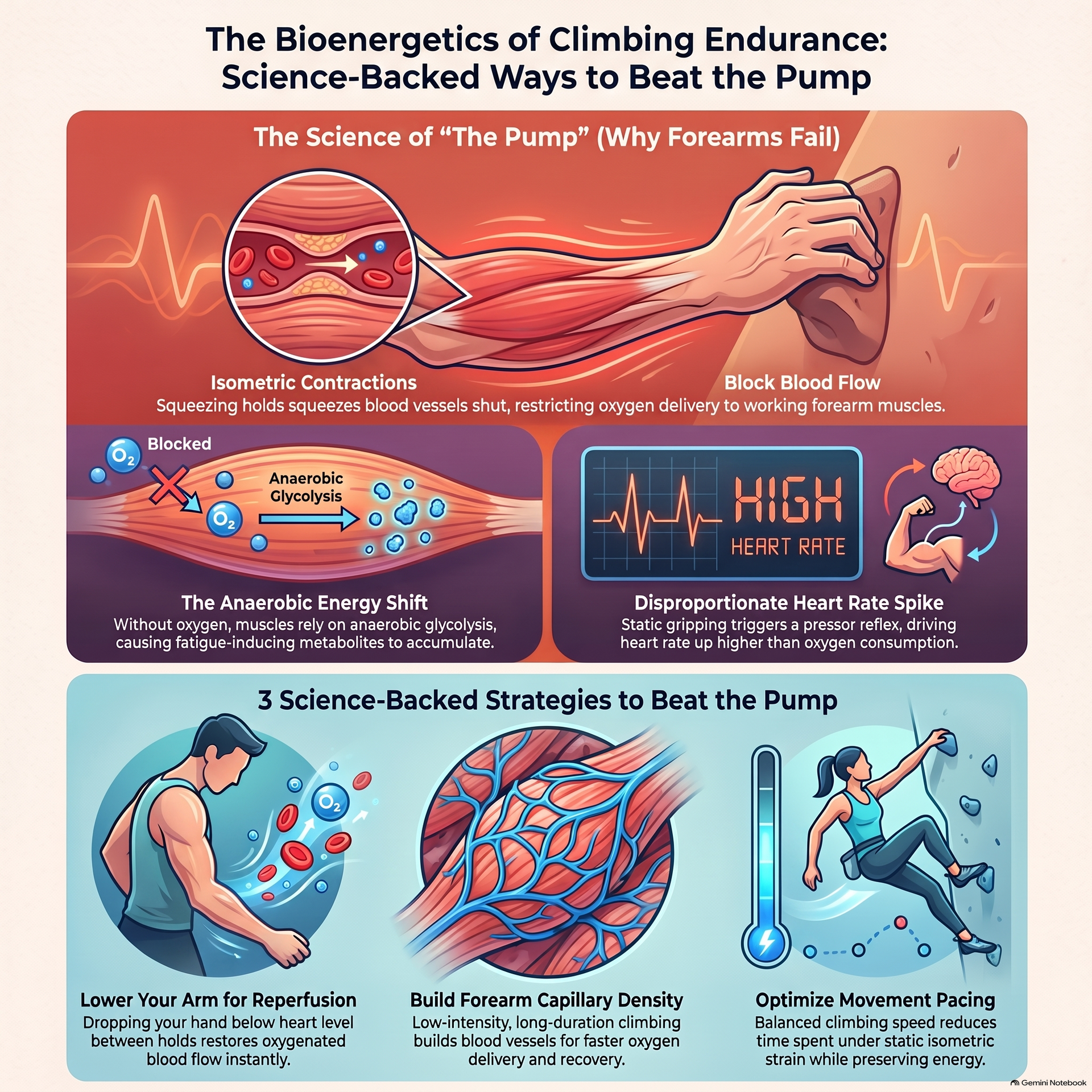
In physics and kinesiology, the human body is viewed as a series of interconnected segments. When an uncoached beginner climbs, they perform "isolated" movement, over-recruiting the small, fragile muscles of their hands and forearms while leaving their large postural muscle groups completely unengaged.
Under these conditions, the force required to hold onto a wall is concentrated entirely on tiny structures like the A2 and A4 finger pulleys or the elbow flexors, resulting in rapid fatigue and joint strain.
Targeted closed kinetic chain exercises train climbers to recruit their entire body—including the shoulder girdle, core, and legs—when holding hangs. By activating this broader chain of muscles, mechanical stress is distributed across the body rather than concentrated on the joints and ligaments of the arm.
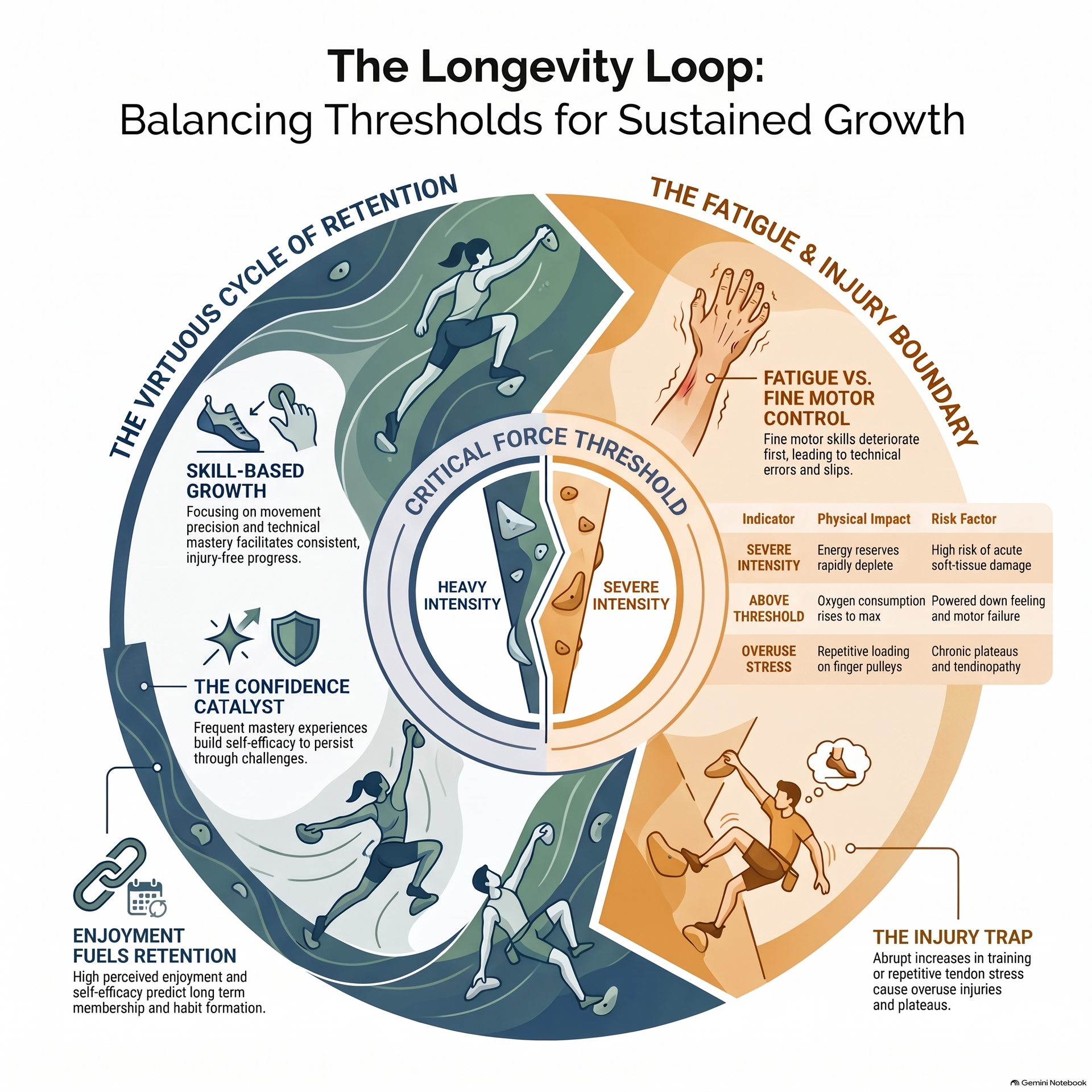
Coaching foundational skills like straight-arm skeletal hanging, precise foot placement, and dynamic center of mass (CoM) control completely changes the climber's safety profile. It dramatically "reduces digital loading" and reduces the risk of repetitive microtrauma, which drives a massive 93% overuse injury rate.
Moving Beyond "Trial by Fire": Meeting the Demands of Today's Adult Climber
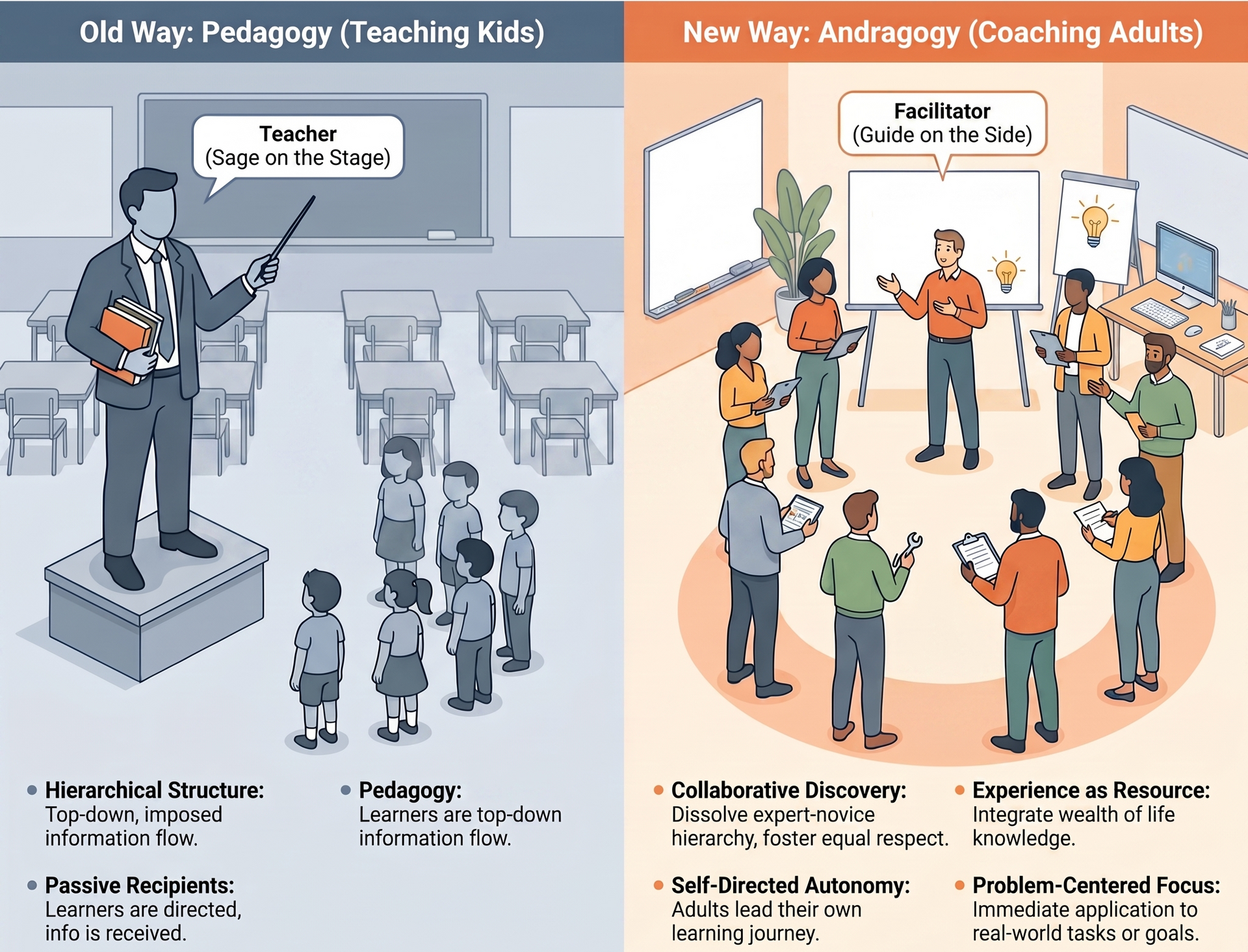
Despite this clear medical evidence, the standard commercial gym model still treats adult technique classes as an afterthought. Most facilities offer a basic "Intro to Climbing" or "Learn to Belay/Lead" class, check off the training box, and then leave the adult alone to navigate over thirty (30) technical movement skills and numerous psychological and social strategies throughout their climbing career.
These skills, techniques, and strategies are equally about safety as they are about climbing longevity.
For a busy, affluent professional with a high household income and very little free time, this lack of curriculum can be a massive consumer turnoff. According to national data from the Climbing Wall Association (CWA), the modern climber demographic is highly educated and financially stable, with household incomes heavily shifting above $150,000 and $200,000.
These consumers do not want a chaotic, trial-by-fire experience where they are constantly falling, feeling self-conscious, and risking physical injury. They demand "predictable, high-quality, and structurally sound experiences" that respect their time and protect their bodily health.
Crucially, the CWA data indicates that members are increasingly frustrated by "underused training boards and specialty fitness equipment that displace functional climbing terrain". Affluent, time-constrained professionals do not want more unprogrammed fitness gadgets. Instead, they want structured, predictable educational programs that show them how to navigate the gym safely and effectively.
How Operators Can Capitalize on the "Technique Dividend"
To capture the "Technique Dividend" and protect a gym's bottom line, commercial climbing gyms could implement three immediate, evidence-based operational shifts:
A. Invest in Coaching and Programming Over Niche Gadgets
Reconsider spending capital on high-cost fitness gadgets that lack instructional programming.
Instead, invest in training your coaching staff to deliver highly structured, progressive movement classes that appeal directly to mature, health-conscious professionals.
B. Scaffold Skill Progressions to Accommodate Diverse Baselines
Adults enter the gym with varied baselines of flexibility, strength, and confidence. To reduce anxiety and build self-efficacy, coaches must use educational scaffolding—breaking down complex movement mechanics (like heel-hooking or dynamic body tension) into small, highly manageable sub-skills.
By introducing skills in a progressive, structured sequence, coaches and instructors ensure that climbers of all baseline physical capabilities experience a high probability of success without feeling overwhelmed.
C. Build Long-Term "Cohort Communities"
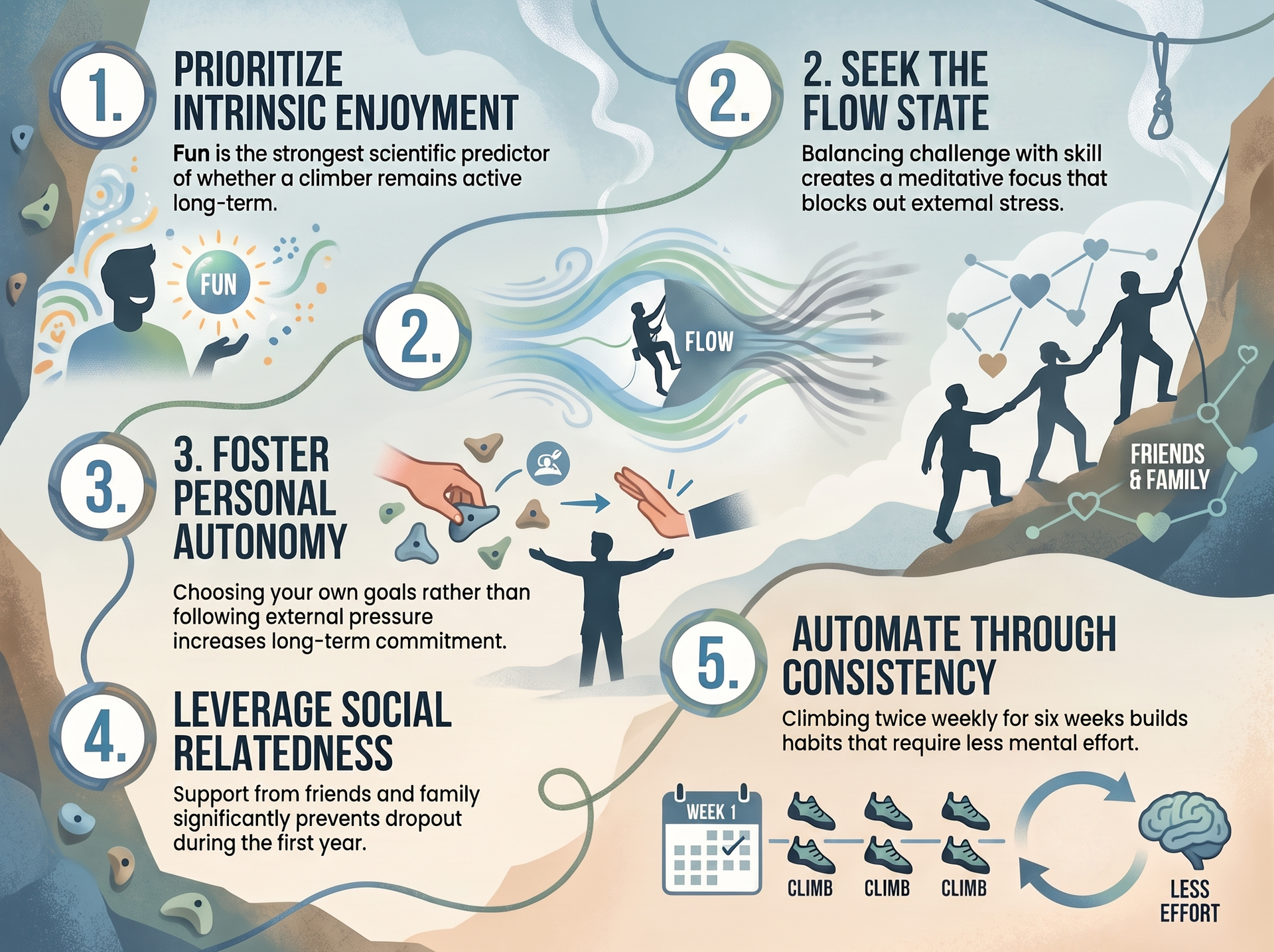
Adults do not stay in a sport solely for the exercise.
They stay for the community. Group-exercise interventions that deliberately facilitate participant interaction, stable cohorts, and shared safety practices report exceptionally high long-term adherence rates. By organizing your Adult Academy into consistent, multi-week partner cohorts—such as couples' classes or stable beginner groups—you foster a deep sense of "belongingness and social capital" that can turn casual gym-goers into lifelong members.
Conclusion
Every time a beginner steps onto a climbing gym and relies on raw upper-body pulling force to climb, a clock starts ticking.
Within weeks or months, they may either hit a frustrating physical plateau or suffer an overuse injury that lands them in a physical therapist's clinic or a medical field still growing in its understanding of climbing-specific injuries.
By applying the science of movement mechanics and investing in structured adult education, you do not just build better climbers. You can build a physically robust, highly connected, and fiercely loyal membership base that stays healthy, mitigates injury risk, and remains actively committed to your facility for decades to come.
References
- Rodrigues F, Teixeira DS, Cid L, et al. The factors affecting adherence to physical activity in fitness facility settings: a narrative review. Timişoara Phys Educ Rehabil J. 2022;15(29):52-59.
- CWA Blog. What seven years of climber data tell us about where indoor climbing is headed. Climbing Wall Association. April 8, 2026.
- Kozin S, Kozina Zh, Jagiello M, Joksimović M. Injury prevention of student rock climbers based on the formation of rational technique of movements: a randomized control trial. Phys Educ Students. 2021;25(5):307-318.
- Vigouroux L, Quaine F, Labarre-Vila A, Moutet F. Estimation of finger muscle tendon tensions and pulley forces during specific sport-climbing grip techniques. J Biomech. 2006;39(11):2583–2592.
- Dech S, Kittel R. Biomechanical Principles and Techniques—A Systematization for Sport Climbing. Journal of Functional Morphology and Kinesiology. 2026;11(103).
- Quarmby A, Zhang M, Geisler M, et al. Risk factors and injury prevention strategies for overuse injuries in adult climbers: a systematic review. Front Sports Act Living. 2023;5:1269870.
- Watts PB. Physiology of difficult rock climbing. Eur J Appl Physiol. 2004;91(4):361-372.
- Backe S, Ericson L, Janson S, Timpka T. Rock climbing injury rates and associated risk factors in a general climbing population. Scand J Med Sci Sports. 2009;19(6):850-856.
- The Decision Lab. Fostering community participation in physical activity. The Decision Lab. 2026.
- McCall RC, Padron K, Andrews C. Evidence-based instructional strategies for adult learners: a review of the literature. Codex: Journal of the Louisiana Chapter of the ACRL. 2018;4(4):29-47.
- Mountain Training. Rock Climbing Candidate Instructor Handbook. Capel Curig, UK: Mountain Training; 2025.
- Mountain Training. Rock Climbing Development Instructor: Guidance for Trainers and Instructors. Capel Curig, UK: Mountain Training; 2025.
- Nielsen G, Wikman JM, Sobol FM, et al. Community belongingness, social capital, and exercise adherence: accepted post-print author's copy. Scand J Med Sci Sports. 2014;24(1):e111-e121.
- Kürten S. Who Are Climbing Walls? Exploration of the Social World of Indoor Rock Climbing. Texas A&M University; 2009.
- Walker SG, Mattson SL, Sellers TP. Increasing accuracy of rock-climbing techniques in novice athletes using expert modeling and video feedback. J Appl Behav Anal. 2020;53(4):2260-2270.