The Science-Backed Guide to Climbing Endurance: Beating the Pump with Bioenergetics
Beating the Pump with Bioenergetics
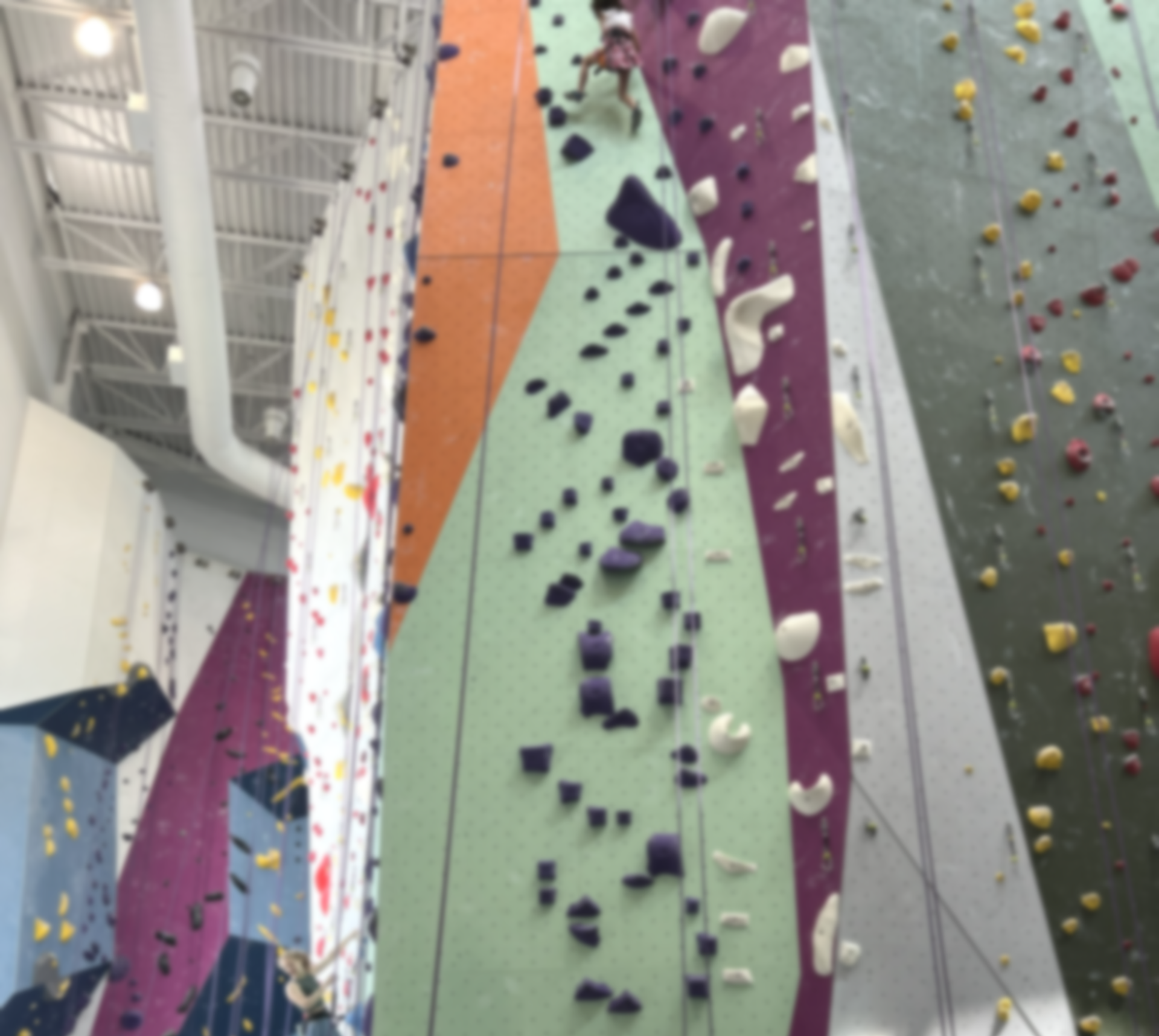
In rock climbing, endurance is often mistaken for general cardio fitness. But if you’ve ever gasped for air while your forearms turned to stone, you know climbing endurance is a different beast. It is primarily governed by the local metabolic and vascular demands placed on your forearm flexors. Unlike rhythmic aerobic sports like running, sport climbing demands intermittent, isometric contractions against gravity.
Here is the physiological reality of the "pump": When you grasp a hold at an intensity exceeding just 50% to 60% of your maximum grip strength, the pressure inside your forearm muscles actually collapses your local capillaries. This transiently cuts off your blood supply, halting oxygen delivery and forcing your muscles to rely on anaerobic energy. When you release the grip to move to the next hold, oxygenated blood rapidly floods back in.
Ultimately, climbing endurance is about how efficiently your forearms handle this continuous rhythm of blood restriction and reperfusion.
The science backs this up. In
a study comparing sport climbers (5.11c to 5.13b) and non-climbers, both groups lasted about the same amount of time when asked to hold a continuous isometric grip at 40% of their max [1]. However, when tested on a rhythmic protocol—5 seconds of gripping followed by 2 seconds of rest—the trained climbers lasted nearly twice as long (853 vs. 420 seconds).
Climbers possess a superior ability to dilate their blood vessels, allowing for rapid reoxygenation during those brief 2-second windows of rest.
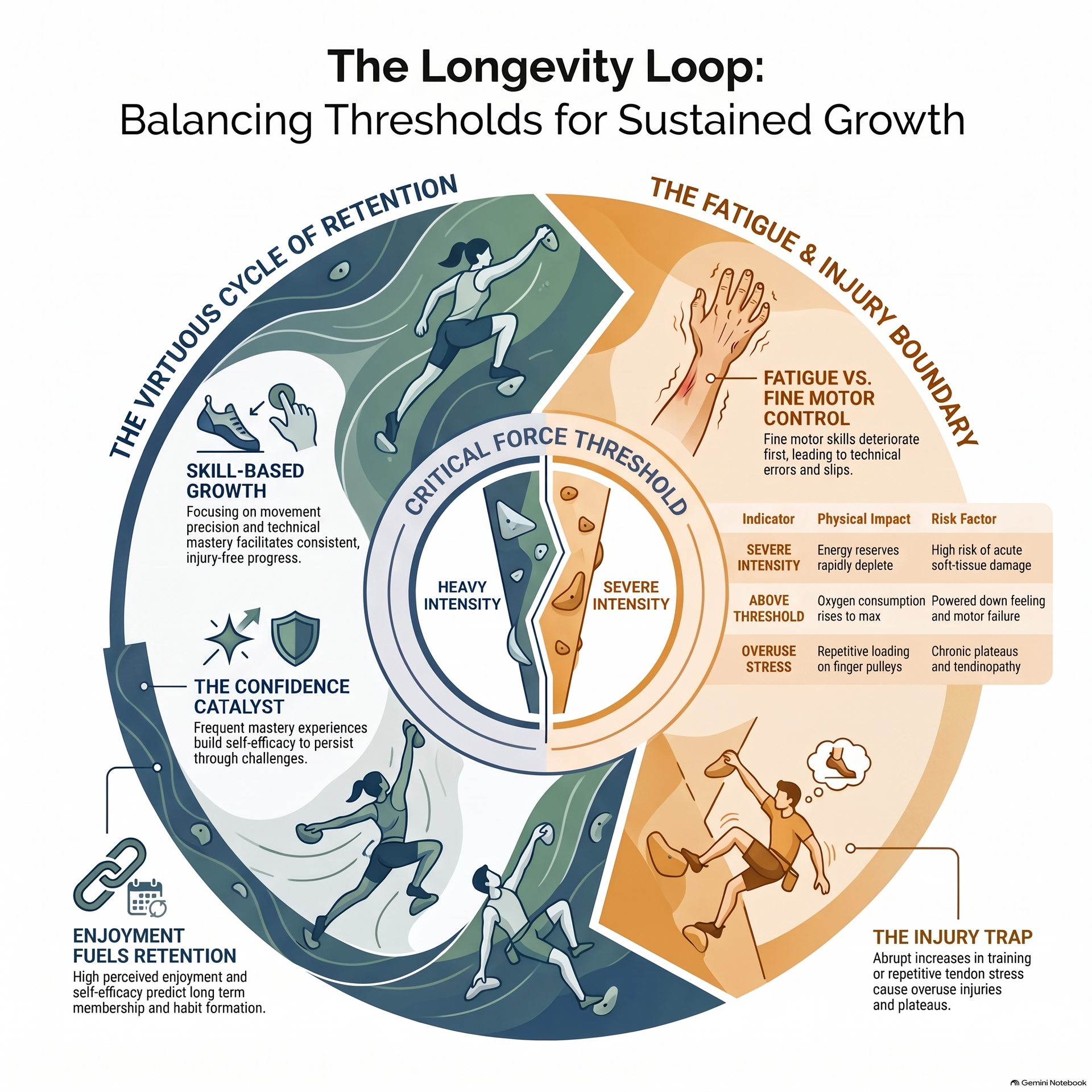
When you do climb to absolute failure, the local fatigue is staggering.
Researchers had 11 expert climbers (5.12a to 5.13d) lead laps on an indoor route until they fell. After an average of 13 minutes on the wall, their max grip strength dropped by 22%, and their ability to sustain a 70% max hold plummeted by 57% . Post-climb blood lactate spiked massively and remained elevated even after 20 minutes of resting on the mats [2].
Why Running Won't Fix Your Endurance
During a hard redpoint, your heart rate skyrockets, but this is often entirely out of proportion to your whole-body oxygen consumption (VO2).
Consider a
field study of 121 recreational indoor climbers. While their gym sessions averaged 90 minutes, they only spent about 24% of that time actually climbing (the other 76% was spent resting or belaying). During active climbing, their heart rates jumped to about 77% of their maximum [3].
Why the high heart rate if you aren't doing whole-body cardio? It’s driven by the muscle
metaboreflex.
When your forearms accumulate lactic acid and other metabolites from isometric crimping, it triggers a nervous system response that artificially elevates your heart rate, independent of your body's actual need for oxygen.
In advanced climbers, submaximal route climbing only required about 75% of their climbing-specific VO2 max [4]. In fact, physiological modeling shows that local forearm oxidative capacity and general cardiorespiratory fitness combined account for roughly 67% of the variance in your climbing performance [5].
Running 10 miles a week won't help you send your project. Once you have a baseline of general cardio, training for climbing endurance must prioritize localized forearm adaptations—specifically increasing capillary density and improving how fast blood flows back into your muscles between grips.
Science-Backed Endurance Training Protocols
To target the specific bioenergetics of climbing, your training should be structured across three primary modalities:
1. ARC Training (Aerobic Restoration and Capillarity)
ARC training involves long-duration, low-intensity continuous climbing. The goal is to stay just below your anaerobic threshold, maintaining a very light pump without ever getting boxed or falling off.
- Target Adaptation: Expands the capillary beds in your forearms and increases local muscle tissue saturation.
- Protocol: 20 to 30 minutes of continuous traversing or auto-belay laps on terrain 2 to 3 letter grades below your redpoint limit.
- Practical Application: Incorporate 20-minute ARC blocks twice a week during early training phases. Build this local vascular base before you introduce high-intensity, skin-shredding workouts.
2. High-Intensity Intermittent Repeaters & Blood Flow Restriction (BFR)
To condition your forearms for the real-world rhythm of sport climbing, intermittent hanging is vastly superior to long, continuous dead-hangs. Time-motion analysis by Michailov indicates that on a route, the average time spent holding a grip is around 8.2 seconds, separated by brief movement transitions [6].
- Target Adaptation: Increases local anaerobic capacity and accelerates reoxygenation kinetics during rest intervals.
- Protocol (7:3 Repeaters): On a 20 mm edge, hang for 7 seconds, then rest for 3 seconds. Repeat this 6 to 10 times per set. Do 3 to 5 sets with 2 to 3 minutes of rest between them. Use half-crimp and open-hand positions.
- Intervention Evidence (The BFR Boost): While standard repeaters are foundational, cutting-edge interventions are pushing vascular adaptations further. An 8-week study utilizing Blood Flow Restriction (BFR) during standardized Kilter Board climbing to failure resulted in a 27.6% increase in time-to-task-failure for the climbers. Near-infrared spectroscopy showed this performance boost happened alongside a significant increase in total hemoglobin blood flow during the rest phases between contractions [7].
- Practical Application: Standard 7:3 repeaters teach your forearms how to recover in the micro-seconds between holds. For advanced athletes, incorporating BFR protocols on system boards can safely exaggerate this localized occlusion to drive even greater vascular adaptation.
3. Climbing-Specific Core Endurance
Endurance isn't just in the arms; it requires transferring force through your entire kinetic chain. A 10-week randomized trial compared dynamic core training (like crunches) against isometric core training (like front levers) in 19 elite climbers.
The isometric group performed progressive static holds twice a week and saw a massive 29.6% improvement in a climbing-specific body-lift test.
The dynamic group showed no significant improvement [8].
- Practical Application: Ditch the sit-ups. Prioritize static, isometric core exercises—like lever progressions, planks, and body lock-offs—to maximize your functional endurance on steep, overhanging terrain.
Tactical In-Session Strategies and Periodization
Optimize Your Shake-Outs
Dropping your non-climbing arm below your heart level during a rest significantly accelerates forearm reoxygenation and lowers metabolite buildup [9]. Letting the arm hang restores hydrostatic pressure, using gravity to push fresh blood back into the occluded muscle.
Use Active Recovery Between Burns
After an exhausting burn on your project, don't just sit on the crash pad.
In
a study of 15 expert climbers (5.12c to 5.14b) who climbed a 27-move route to failure, those who did 30 minutes of light, recumbent cycling cleared their blood lactate back to baseline within 20 minutes. For those who rested passively, lactate remained elevated well past the 30-minute mark [10].
References
- Ferguson, R. A., & Brown, M. D. (1997). Arterial blood pressure and forearm vascular conductance responses to sustained and rhythmic isometric exercise and arterial occlusion in trained rock climbers and untrained sedentary subjects. Eur J Appl Physiol, 76(2), 174-180.
- Watts, P. B., Newbury, V., & Sulentic, J. (1996). Acute changes in handgrip strength, endurance, and blood lactate with sustained sport rock climbing. J Sports Med Phys Fitness, 36(4), 255-260.
- Smetanka, R. G., et al. (2022). Heart rate response, duration, grip strength, and anthropometric characteristics in recreational indoor rock climbers. J Strength Cond Res, 36(3), 832-837.
- Booth, J., Marino, F., Hill, C., & Gwinn, T. (1999). Energy cost of sport rock climbing in elite performers. Br J Sports Med, 33(1), 14-18.
- Fryer, S. M., et al. (2018). Hemodynamic and cardiorespiratory predictors of sport rock climbing performance. J Strength Cond Res, 32(12), 3534-3541.
- Michailov, M. L., et al. (2018). Reliability and validity of finger strength and endurance measurements in rock climbing. Res Q Exerc Sport, 89(2), 246-254.
- McKellar, B. (2024). The Effect of Blood Flow Restriction Training on Rock Climbing Performance, Forearm Blood Oxygenation and Cardiovascular Responses (Master's thesis).
- Saeterbakken, A. H., et al. (2018). Effects of ten weeks dynamic or isometric core training on climbing performance among highly trained climbers. PLoS ONE, 13(10), e0203766.
- Baláš, J., et al. (2016). Active recovery of the finger flexors enhances intermittent handgrip performance in rock climbers. Eur J Sport Sci, 16(7), 764-772.
- Watts, P. B., et al. (2000). Metabolic response during sport rock climbing and the effects of active versus passive recovery. Int J Sports Med, 21(3), 185-190.