Beyond the Grades: The Top 5 Science-Backed Factors for Lifelong Climbing Adherence and Joy
The Top 5 Science-Backed Factors for Lifelong Climbing Adherence and Joy
Beyond the Grades: The Top 5 Science-Backed Factors for Lifelong Climbing Adherence and Joy
For many adults, starting a new fitness routine is exciting, but sticking with it is the real challenge. Decades of data show that traditional health and fitness clubs suffer from incredibly high dropout rates, with 40% to 65% of individuals initiating a program dropping out within the first three to six months. For climbing gyms, combating this early attrition is the single most effective way to maximize Customer Lifetime Value (CLV).
So, what keeps a person coming back to the gym week after week, year after year? When it comes to rock climbing,
the secret to longevity does not lie in how hard you can pull or what grade you can tick off. Instead, the scientific literature reveals that
long-term participation is driven by a deep, multifaceted blend of psychology, community, and smart physical management.
If we want to build a sustainable, lifelong climbing practice, we must design our training around the top five evidence-based factors that support sport retention.
Prioritizing Joy and Intrinsic Enjoyment (Reframing Movement as Play)
While traditional exercise prescriptions rely on rigid, dose-determining principles like Frequency, Intensity, Time, and Type (FITT) to dictate workloads, sports science is entering a new "era of affectivism", which recognizes that enhancing a person's immediate, in-task feelings during movement is far more predictive of long-term adherence than any biological metric.
However, the physical activity literature is clear: while extrinsic goals (like losing weight or lowering blood pressure) might prompt someone to start exercising, intrinsic motives—specifically enjoyment and fun—are what keep people active in the long term.
In fitness facility studies, "enjoyment" consistently emerges as the single most powerful predictor of regular attendance. Psychology research tells us that "enjoyment associated with feelings of fun and pleasure is an important psychological construct related to the maintenance of physical activity."
By shifting our climbing focus toward sustainable physical fitness goals, we allow participants to reframe physical movement entirely. As
one adult climber put it:
It's made me, like, reframe uh—you know—like, physical movement like...it can be fun, and...it can be something that I do for fun in my free time. It doesn't have to be like, this high intensity workout that I am doing
To put it simply, "the best climber is the one having the most fun".
Fostering "Sacred" Partnerships and Social Capital
Being socially isolated is a major health hazard, whereas "being imbedded in a social network provides real benefits for health and well-being" by "helping us to overcome a range of stressors". Climbing is uniquely positioned to combat this isolation because, "with the exceptions of free solo climbing or automatic belaying systems, the action of rock climbing is fundamentally communal".
When you climb with ropes, you put your physical safety entirely in another person’s hands. This unique dynamic builds a profound level of interpersonal trust:
"When you climb, you have to trust those people around you 'cause it can be dangerous. So, it's like the outlying ability to trust other people and then build really close relationships with people who I can trust".
This belayer-climber relationship creates a powerful, close-knit social bond that many participants
describe as "sacred". This
supportive social network creates "feelings of belongingness [that] may have the power to influence climbers to participate despite their physical skills or technical skills not progressing" at the same rate as others.
Meeting Basic Psychological Needs (Competence and Problem-Solving)
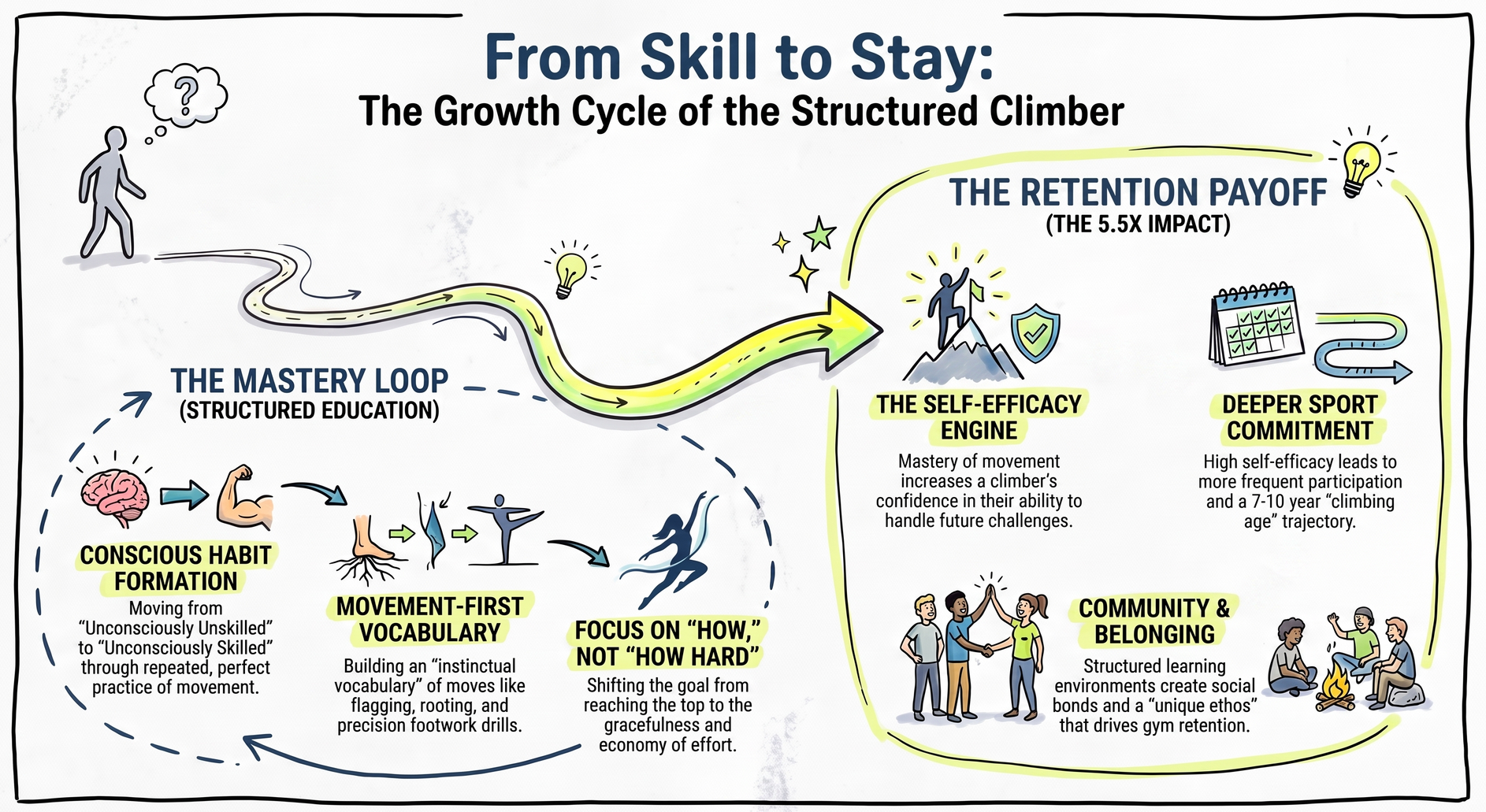
According to Self-Determination Theory, human thriving and behavioral persistence depend on satisfying three basic psychological needs: autonomy, competence, and relatedness. Climbing is a highly effective vehicle for satisfying these needs because it is as much a cognitive puzzle as it is a physical workout.
Specifically, "climbing may increase important psychological skills... due to the need to problem-solve, cope with fear, set goals and increase mastery".
For mature adults, long-term commitment is solidified when the focus of a sport shifts from external comparison to internal mastery. Studies on older exercisers confirm that "personal satisfaction resulted from competence, sacrifice, and autonomous needs that support internalization and knowing that an active lifestyle is a formative and worthwhile component of the self". Reaching the top of a route through clever movement choice and focused execution provides an immediate, potent boost to self-efficacy and mood.
Creating Autonomy-Supportive Environments
People naturally return to environments where they feel in control of their actions.
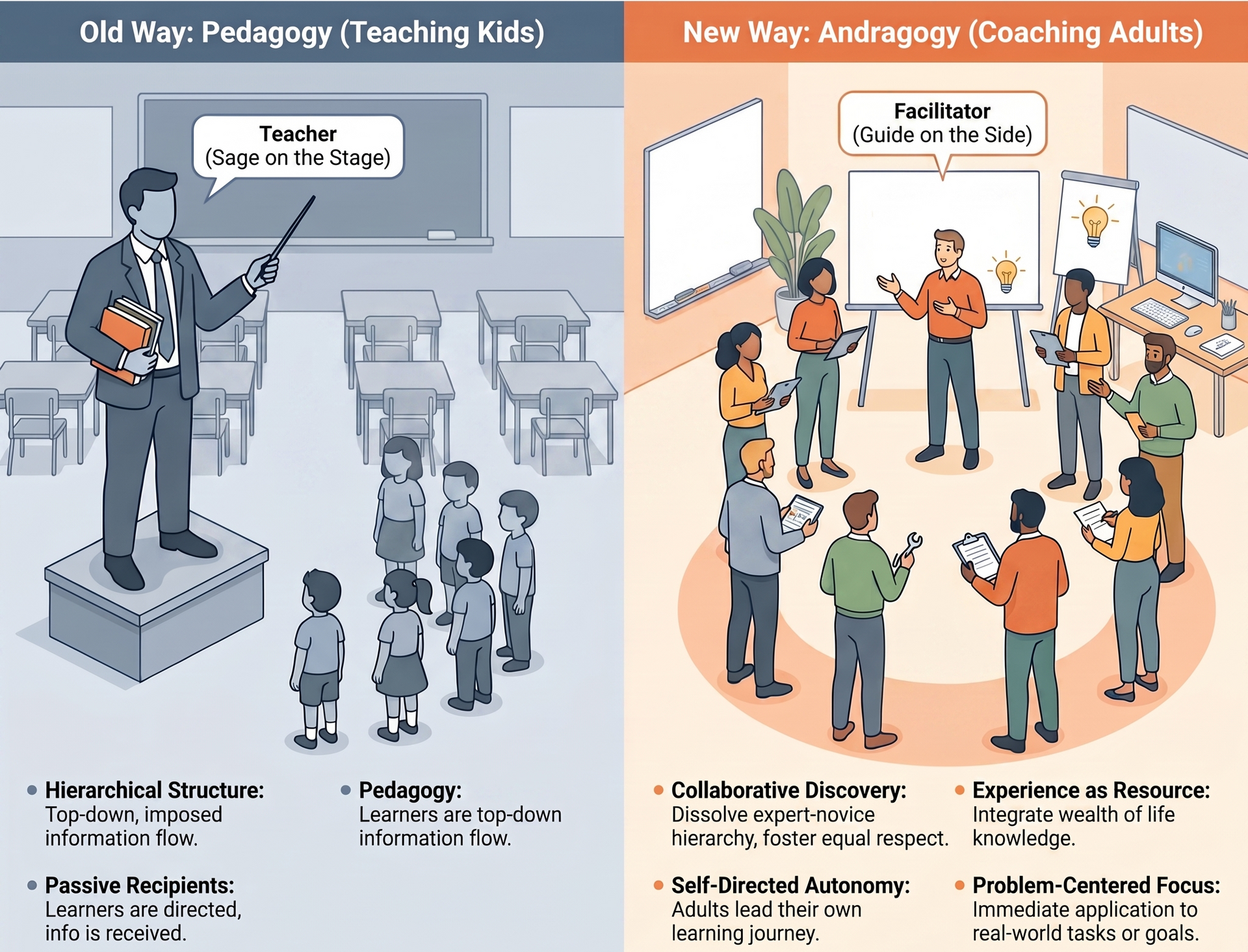
The literature surrounding community physical activity shows that "when the social environment promotes autonomy (feeling in control), relatedness (feeling connected to others), and competence (feeling capable)... individuals are more likely to feel intrinsically motivated to engage in beneficial behavior". In contrast, rigid, top-down structures that force people to perform high-intensity or highly restrictive exercises often crush intrinsic drive and lead to rapid dropouts.
For a climbing program to remain sustainable, coaches and routesetters must offer a menu of choices (e.g., opting for easier, continuous vertical movement versus short, intense boulder problems). "Adherence to long-term physical activity may be strengthened by promoting the satisfaction of a person's basic psychological needs," allowing them to find their own rhythm on the wall.
Engineering Adherence Through Proactive Injury Prevention
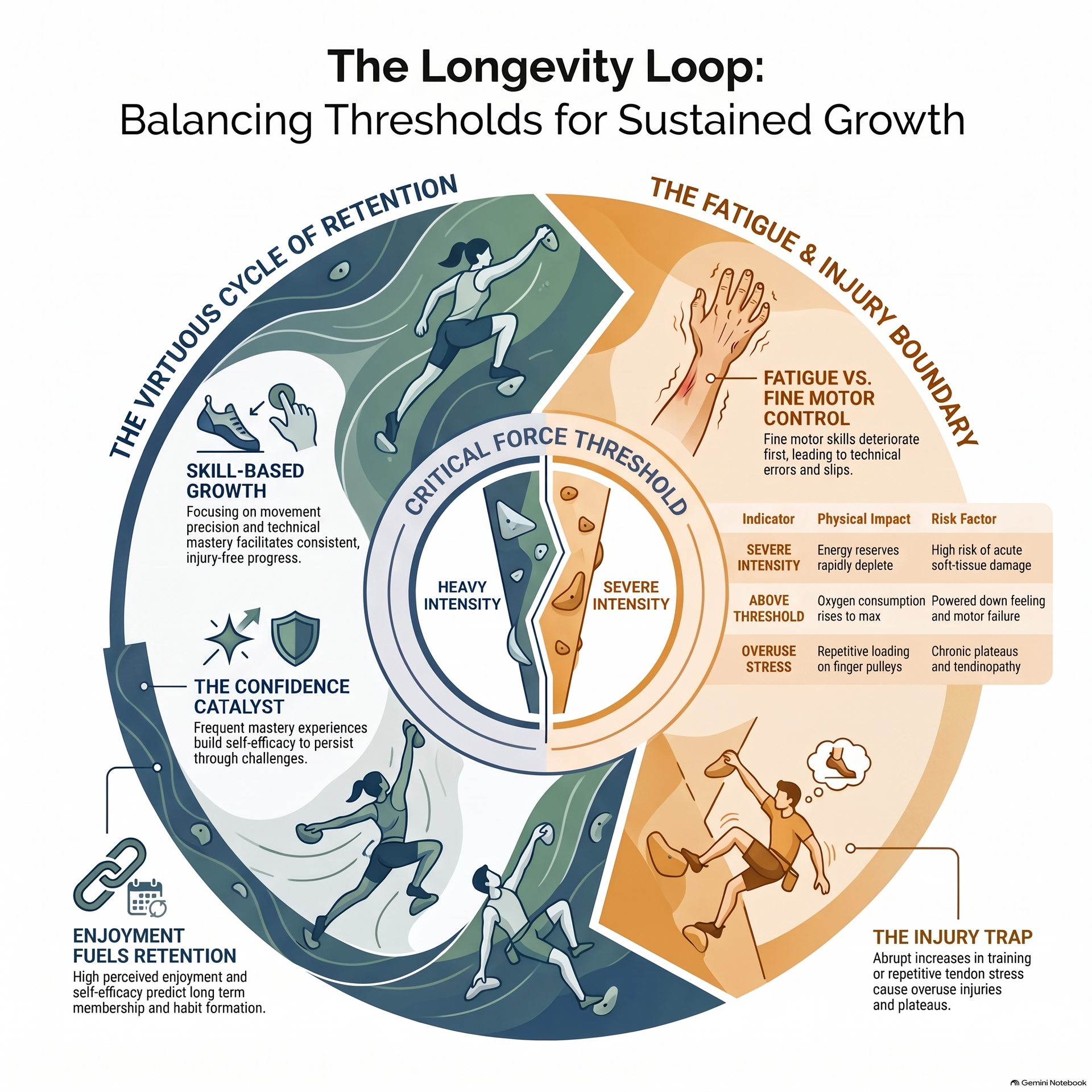
The most overlooked barrier to long-term athletic participation is injury. In climbing, this is a massive systemic risk; "most injuries in climbing are thought to be overuse in origin, with up to 93% of injuries defined as such".
Because "nothing hinders climbing development faster than an injury, so it's important to stay healthy" (Why Footwork Matters; Outside Learn). When an adult climber suffers a finger pulley tear, chronic elbow tendonitis, or a shoulder impingement due to sloppy technique or overtraining, they are often forced to take months off. This disruption in training continuity is a major catalyst for permanent sport dropout.
To engineer long-term adherence, a climbing program must prioritize joint preservation and movement efficiency from day one.
Clinical sports medicine strongly advocates that:
"climbing injury prevention should be based on the climbing load being systematically combined with rest, starting at a novice level".
By prioritizing silent, precise footwork, straight-arm skeletal hanging, and active-recovery cool-down laps, we can actively shield climbers' joints. This supports them in staying healthy, reduces risk of injury, and supports them in being physically capable of returning to the gym week after week.
References
- Rodrigues F, Teixeira DS, Cid L, et al. The factors affecting adherence to physical activity in fitness facility settings: a narrative review. Timişoara Phys Educ Rehabil J. 2022;15(29):52-59.
- Wankel LM. Personal and situational factors affecting exercise involvement: the importance of enjoyment. Res Q Exerc Sport. 1985;56(3):275-282.
- Teixeira DS, Rodrigues F, Cid L, et al. Enjoyment as a predictor of exercise habit, intention to continue exercising, and exercise frequency. Front Psychol. 2022;13:780059.
- Wiegand M, Jekauc D. A study on the psychometric properties of the short version of the physical activity enjoyment scale in an adult population. Int J Environ Res Public Health. 2022;19(15):15294.
- Osborne S, et al. Indoor climbing and well-being of young adults - perspectives among indoor climbers. PLoS One. 2025;20(4):e0321542.
- Coates EL. Stories of Parents Who Climb. Buckinghamshire New University; 2011.
- Kürten S. Who Are Climbing Walls? Exploration of the Social World of Indoor Rock Climbing. Texas A&M University; 2009.
- Molanorouzi K, Khoo S, Morris T. Motives for adult participation in physical activity. BMC Public Health. 2015;15:66.
- Deci EL, Ryan RM. Intrinsic Motivation and Self-Determination in Human Behavior. Plenum Press; 1985.
- Wheatley L, et al. Climbing and mental health scoping review. Mental Health and Physical Activity. 2023;13:77-82.
- Gassner L, Dabnichki P, Langer A, et al. The therapeutic effects of climbing: a systematic review and meta-analysis. PM&R. 2023;15(9):1194-1209.
- The Decision Lab. Fostering Community Participation in Physical Activity. The Decision Lab; 2026.
- Quarmby A, Zhang M, Geisler M, et al. Risk factors and injury prevention strategies for overuse injuries in adult climbers: a systematic review. Front Sports Act Living. 2023;5:1269870.
- Outside Learn. Why Footwork Matters. Outside Interactive; 2025.
- Backe S, Ericson L, Janson S, Timpka T. Rock climbing injury rates and associated risk factors in a general climbing population. Scand J Med Sci Sports. 2009;19(6):850-856.