Have you ever stood on the rubber floor of a climbing gym, looked up at a wall, and felt completely alone in your search for answers? Wandering through a crowded facility, watching experienced climbers move with effortless grace while you try to piece together advice from anyone willing to talk—people with wildly different experience levels and zero formal credentials—is an isolating way to start a sport. Add in the confusion of navigating conflicting rules and differing belay tests at every gym you visit, and it is easy to feel stuck before you even tie in.
This fragmented journey is why
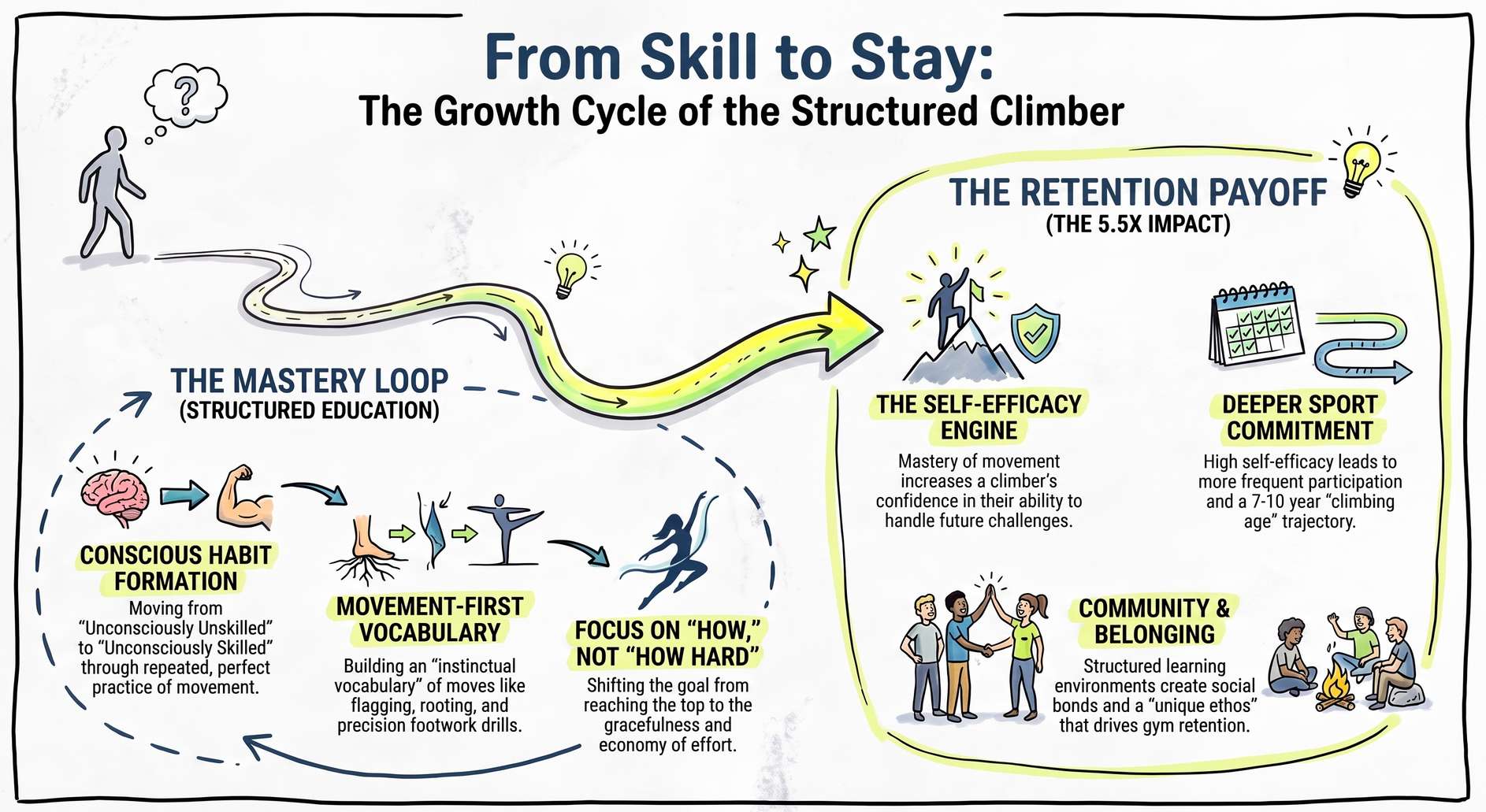
ClimbWell Fitness was founded. It exists for the climber looking up from the mat asking, "How do I actually get up there, and who can I trust to teach me?" In fact, if a seasoned climber had not stopped to show me the specific biomechanics of holding a sloper, I might have given up on climbing altogether. Climbing is inherently demanding, but the pathway to turning it into a lifelong pursuit should never feel solitary or confusing. That is why ClimbWell Fitness provides gyms with an evidence-based curriculum designed to replace piecemeal advice with structured movement efficiency, safety confidence, and true community support.
For gym operators, program directors, and head coaches, addressing this initial confusion is not just a hospitality preference—it directly impacts member retention, safety compliance, and long-term facility growth.
Translating Technical Clarity into Physical Economy
When new climbers enter a facility without structured coaching, their lack of technical clarity creates immediate physical strain. According to a study published in the Journal of Exercise Physiology by researchers at the University of New Mexico and the University of Wisconsin-La Crosse, novice sport climbers experience a
15.5% higher pre-climb heart rate and a
12.4% higher climbing heart rate compared to recreational climbers on identical vertical routes.
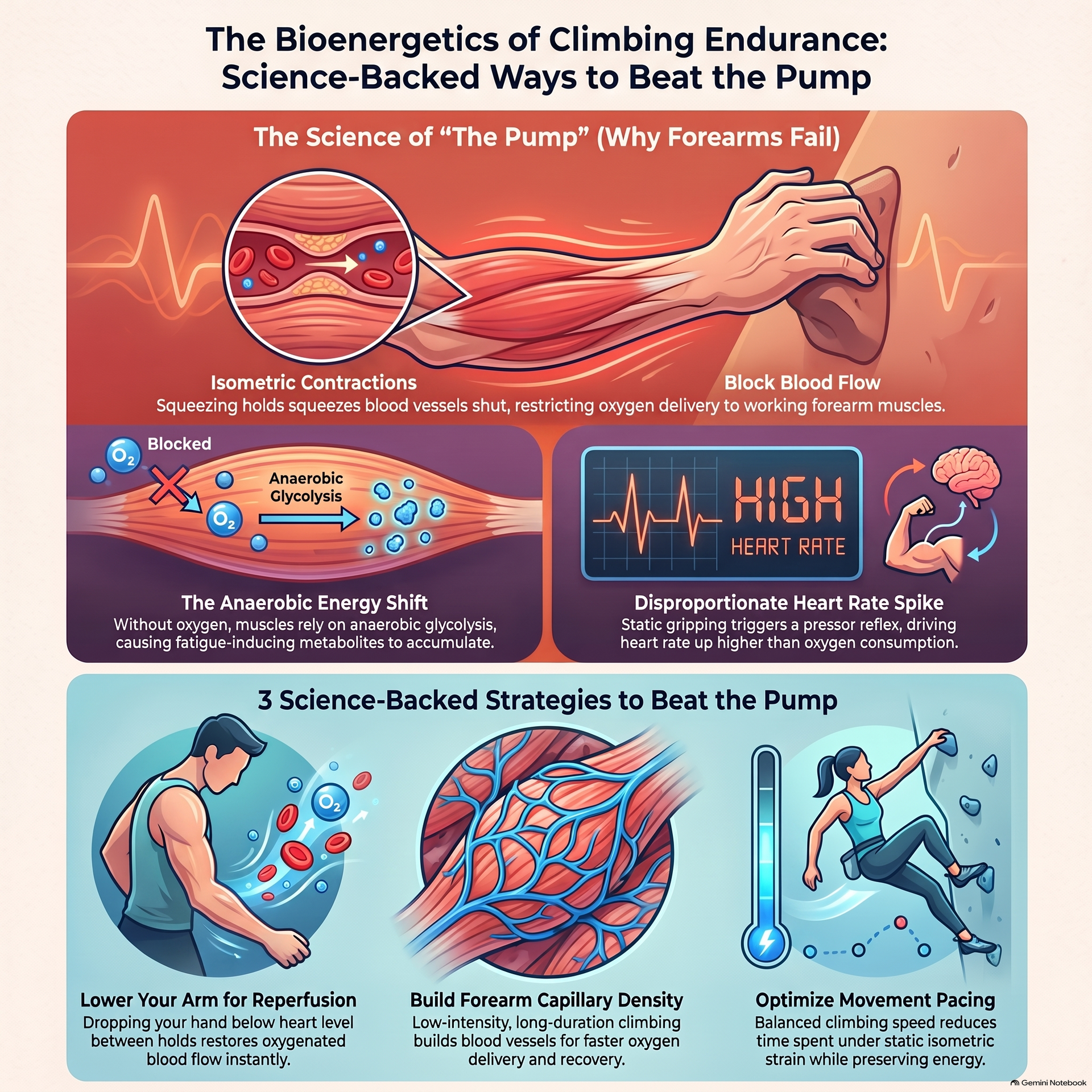
This elevated physiological strain stems directly from movement inefficiency. Unsure of how to position their body, beginners instinctively over-rely on their arms rather than driving movement through their lower limbs. Because the smaller muscles of the fingers and forearms fatigue far faster than the legs, novices suffer rapid muscular burnout and register significantly higher ratings of perceived exertion.
When gym operators provide structured introductory instruction, this physical tax drops dramatically. The study highlighted that task familiarity and foundational technique allow climbers to transition away from inefficient upper-body pulling, enabling smoother movement and lower cardiovascular strain for the exact same physical difficulty.
Replacing Fragmented Advice with Systematized Safety
Piecemeal learning does not just hinder movement efficiency; it also leaves dangerous gaps in safety protocols. As climbing gyms expand into mainstream fitness spaces, informal peer-to-peer advice often fails to establish rigorous safety habits.
A study conducted by researchers at Thompson Rivers University examined climber behavior across
eight indoor climbing gyms in Canada and the United States, comparing what climbers report doing against their actual observed habits:
- Rope Knot Checks: While
88% of surveyed climbers claimed they always double-check their tie-in knot, direct observation revealed that only
54% actually performed a double-check before ascending.
- Belay Device Checks: Although
86% of climbers stated they verify that their belay device is threaded correctly, observers recorded checks in only
56% of instances.
- Auto-Belay Clip-Ins: While
83% of climbers reported double-checking their auto-belay connection, direct observation revealed that a startling
10% of climbers verified their clip-in before starting up the wall.
The lead researcher noted that these dangerous oversights are rarely caused by a lack of education or an intentional disregard for safety. Instead, they stem from
cognitive confusion,
distraction,
excitement to start climbing, and a
failure to establish a non-negotiable, systematized checking process.
Unlocking Cognitive Speed and Stress Relief on the Wall
When climbing facilities guide newcomers past initial movement confusion and establish automated safety habits, the personal rewards for participants extend far beyond physical fitness.
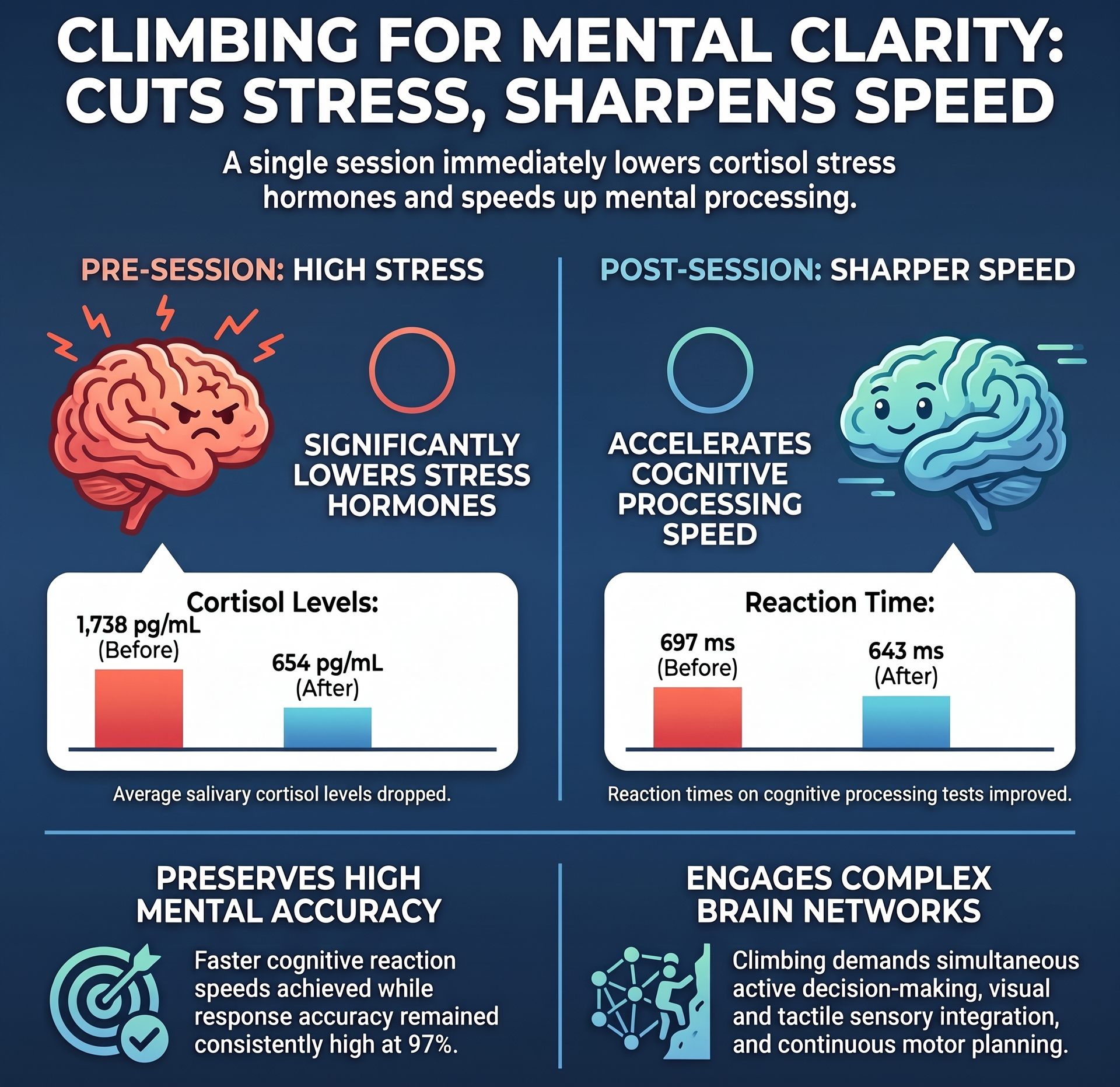
According to a 2025 study conducted at Northern Michigan University, an acute 20-minute bout of moderate-intensity climbing on a Treadwall yielded immediate cognitive and stress-regulation benefits in healthy adults:
- Sharpened Cognitive Speed: Participants in the climbing protocol demonstrated significant improvements in executive processing speed, improving their Stroop test reaction times by an average of
34.8 milliseconds while maintaining full response accuracy.
- Suppressed Stress Biomarkers: Salivary cortisol levels dropped sharply following the climbing session, decreasing from a baseline average of
1,738.4 pg/mL down to
653.9 pg/mL immediately after climbing and remaining suppressed at
679.5 pg/mL 30 minutes later.
This dual outcome—accelerating mental processing speed while downregulating physiological stress markers—proves that indoor climbing is a premier activity for mental clarity and stress relief.
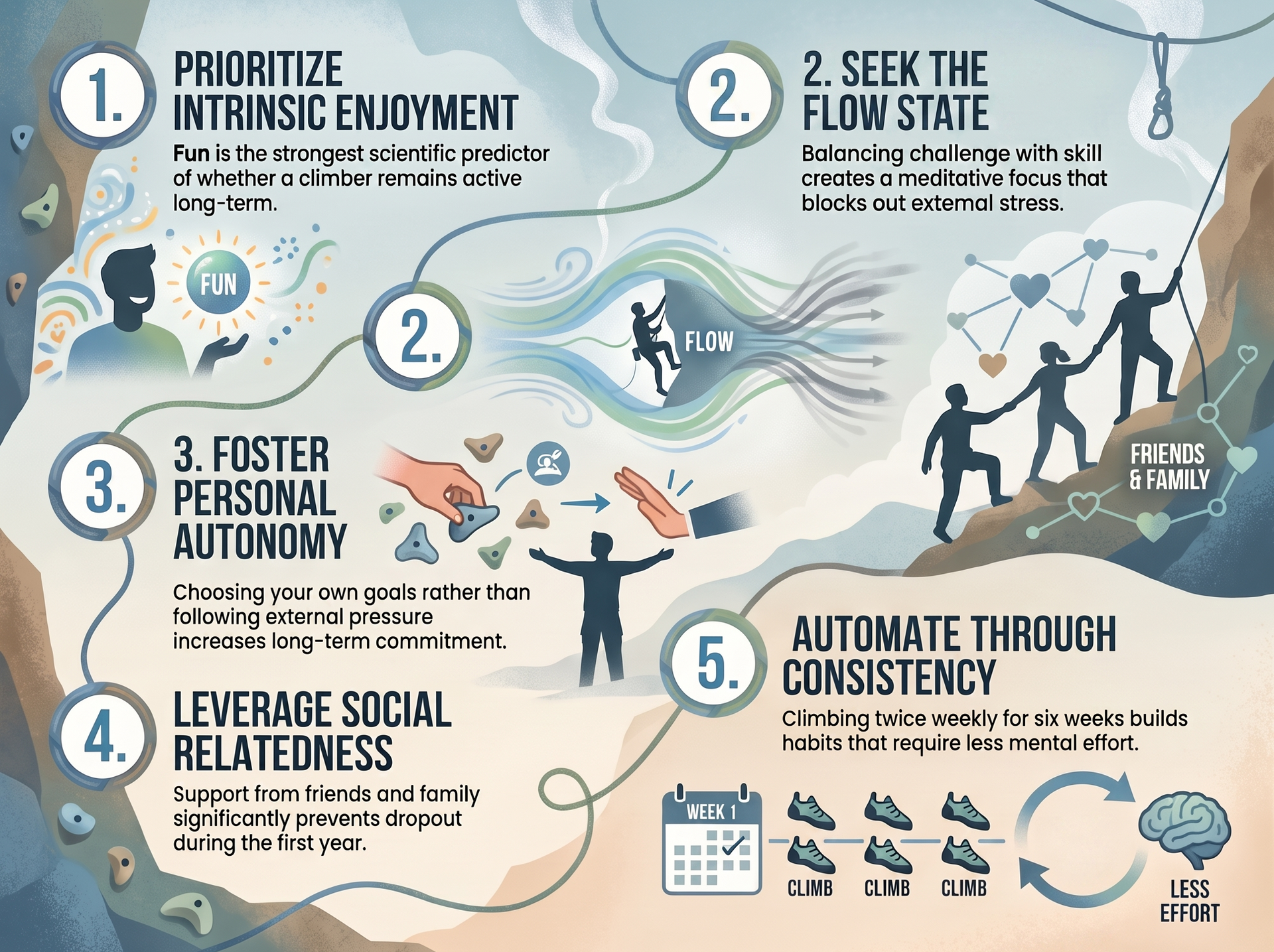
By implementing an evidence-based curriculum that replaces fragmented advice with clear technique, structured safety habits, and supportive instruction, gym operators can transform isolated beginners into confident, lifelong members who return to the wall week after week.